






Introducción
When the power grid fails, the clock starts ticking. Your freezer is warming up, the lights are out, and your family is waiting for a solution. At that moment, how you connect your generator to your home matters immensely.
For homeowners researching backup power, the debate often comes down to two options: the budget-friendly Generator Interlock Kit or the professional-grade Interruptor de transferencia.
While an interlock kit might save you a few dollars upfront, does it meet safety standards? Is it compliant with the National Electrical Code (NEC)? In this guide, we strip away the marketing hype to compare Generator Interlock Kits vs. Transfer Switches on safety, legality, and long-term value.

What Is a Generator Interlock Kit?
A Generator Interlock Kit is a simple mechanical device—usually a metal plate—mounted on your existing electrical panel cover. Its function is rudimentary: it physically blocks the main circuit breaker from being ON while the generator circuit breaker is ON.
To use it, you must:
-
Walk to the panel.
-
Turn OFF the main utility breaker.
-
Slide the interlock plate.
-
Turn ON the generator breaker.
The Appeal: It is inexpensive (hardware often costs under $150) and allows you to theoretically power any circuit in your house—provided you don’t turn them all on at once.
What Is a Transfer Switch?
A Interruptor de transferencia is a dedicated electrical device that safely isolates the utility power from the generator power. It completely breaks the connection to the grid before making a connection to the generator (Break-Before-Make).
There are two main types:
-
Manual Transfer Switch (MTS): You manually flip a switch to transfer power to selected circuits. It is the gold standard for portable generators.
-
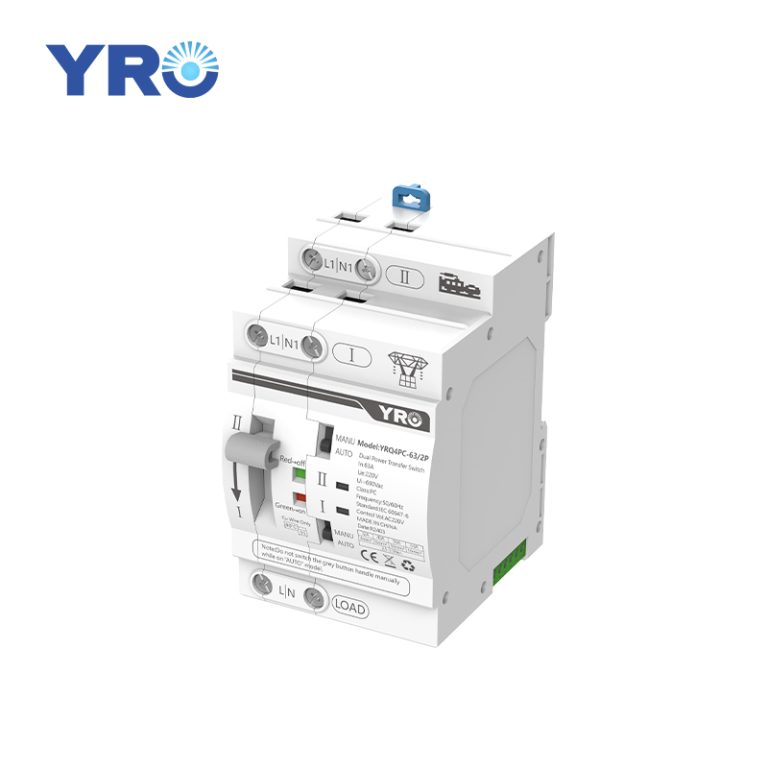
Automatic Transfer Switch (ATS): The system detects a power outage and automatically starts the generator and switches the load, even if you aren’t home.
The Appeal: It is the safest, most code-compliant method ensuring zero chance of dangerous backfeeding.
Interlock Kit vs. Transfer Switch: The Critical Differences
Here is a quick breakdown of how they stack up:
| Característica | Generator Interlock Kit | Transfer Switch (MTS/ATS) |
| Cost (Hardware) | Low ($) | Moderate to High ($) |
| Safety Level | Moderate (Dependent on human operation) | High (Fail-safe engineering) |
| Grid Isolation | Mechanical blocking plate | Physical electrical isolation |
| Automation | Impossible | Available with [ATS Models]([Link to ATS Product Category]) |
| Load Management | Guesswork (User must manage loads) | Pre-wired dedicated circuits |
Safety and Code Compliance: The Hidden Risks of Interlocks
This is the most important section for any homeowner. While Interlock Kits are legal in many jurisdictions, they carry inherent risks that a dedicated Interruptor de transferencia eliminates.
The Risk of “Backfeeding”
Backfeeding occurs when generator power flows back into the utility lines. If an interlock kit is installed incorrectly, or if the cover is removed for maintenance, the mechanical block disappears. If power backfeeds, it can electrocute utility workers trying to fix the power lines.
A Interruptor de transferencia physically isolates the neutral and hot wires, making backfeeding electrically impossible.
NEC Code Compliance (NEC 702)
The National Electrical Code (NEC) article 702 requires that optional standby systems must have capacity for the entire load they are connected to, or use load management.
-
Interlock Problem: Since an interlock powers the whole panel, you could accidentally turn on the A/C, oven, and dryer simultaneously, overloading and damaging your generator.
-
Transfer Switch Solution: A Manual Transfer Switch typically connects to 6-10 specific circuits. You cannot accidentally overload the generator because the switch limits what can be powered.
Circuit Protection
Transfer switches often come with built-in watt meters and Disyuntores designed to protect your generator from being overworked. Interlock kits lack this layer of protection.
Why a Transfer Switch is a Better Long-Term Investment
While the initial installation of an Interlock Kit is cheaper, a Transfer Switch offers superior value and usability.
Automation and Peace of Mind
An interlock kit requires you to be home, find a flashlight, and manually switch breakers. If you travel, your home has no backup.
Installing an Interruptor de transferencia automática ensures that your sump pump runs, your security system stays on, and your food stays cold—whether you are home or on vacation.
Solar and Battery Integration
Are you planning to add solar panels or battery storage later? Interlock kits are rarely compatible with modern hybrid inverters.
Advanced transfer switches and Solar Isolator Switches are designed to work seamlessly with renewable energy systems, offering a future-proof solution.
Enhancing Home Value
A professionally installed transfer switch is a recognized asset during a home inspection. An interlock kit, often viewed as a “DIY workaround,” does not add the same value and may even raise questions from strict home inspectors.
Cost Analysis: Is the Savings Worth the Risk?
Many homeowners choose interlocks to save money. But let’s look at the reality.
-
Interlock Kit: Cheap parts + high electrician labor (to rearrange the panel) = Moderate Cost.
-
Manual Transfer Switch: Moderate parts + standard electrician labor = Slightly Higher Cost.
The price difference is often less than 300-500. Considering a Manual Transfer Switch prevents you from burning out your $1,000+ generator due to overloading, the ROI is clear.
Conclusión
If you are an experienced electrical DIYer on a strict budget, an Interlock Kit is a functional band-aid. However, for the safety of your family, the protection of your generator, and full compliance with electrical codes, a Interruptor de transferencia is the superior choice.
-
Go with an MTS for portable generators and budget-conscious safety.
-
Go with an ATS for complete automation and the highest level of protection.
Don’t compromise on electrical safety.
Explore our range of NEC-compliant Interruptores de transferencia manual y Automatic Transfer Switches to find the perfect match for your home backup power.