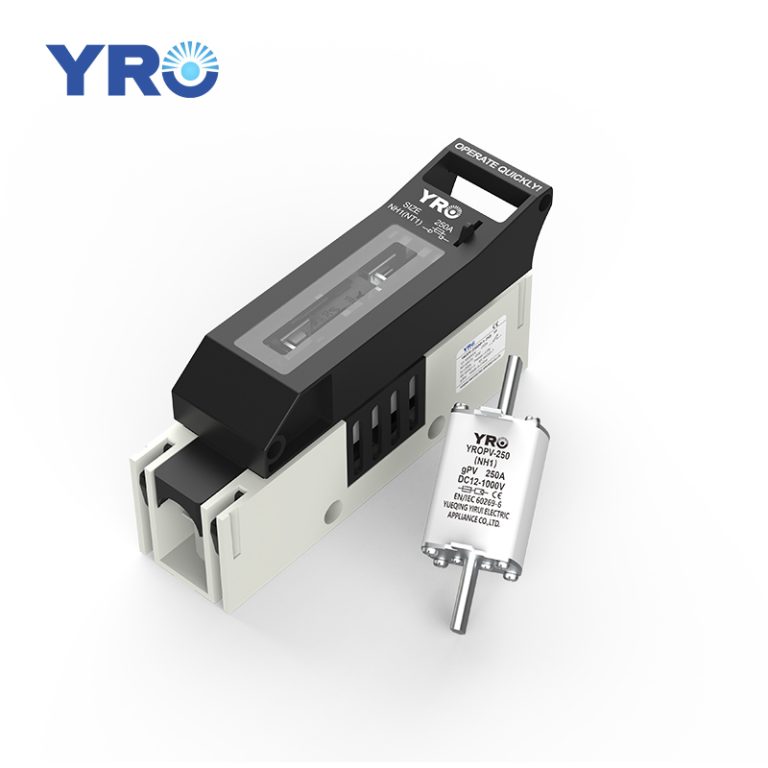







In regions such as the Philippines, customers often ask this question: Will low voltage cause the fusible to blow? Although fuses are designed to protect the circuit from overcurrent damage, in actual usage, low voltage in certain circumstances may also cause the fuse to blow.
What Causes Low Voltage?
Low voltage typically refers to a situation, where the voltage at a certain point in the power system falls below the specified range of its rated voltage. The occurrence of low voltage is a multi-factor, systemic issue, usually reflecting an imbalance between the power system’s supply capacity and demand. The causes typically include the following:
- Insufficient Power Supply System Capacity
This is the most direct cause of low voltage, primarily referring to the power source’s inability to provide sufficient voltage to support the load demand.
- Transmission and Distribution Line Issues
Transmission and distribution lines are the “arteries” connecting the power generation end to the user end, and their quality directly affects voltage transmission. With excessively long lines, voltage drop occurs during long-distance transmission. Especially when users are located far from the transformer, the voltage decreases as the distance increases.
- Load
Excessive load, or concentrated growth in user electricity consumption exceeding the local grid’s load-bearing capacity, leads to voltage suppression.
- Grid-Related Reasons
The structure and management of the grid itself also affect voltage levels. An excessively large power supply radius easily leads to voltage drop; insufficient reactive power compensation means the voltage cannot be effectively boosted.
Typically, low voltage by itself does not cause the current to exceed the fuse’s rated value, but it can indirectly lead to a fuse blow. For example, motor-type appliances operating under low voltage may draw a working current exceeding their designed rated value, thereby triggering the fuse.

Abnormal Behavior of Electrical Appliances Under Low Voltage
Low voltage has various impacts on the behavior of electrical appliances, and the specific manifestations depend on the type of the appliance and its design tolerance. The following are common behaviors of appliances under low voltage:
1、Motor-driven appliances (such as air conditioners, refrigerators, washing machines, fans, pumps)
- Decreased speed and power loss: The motor speed will significantly decrease, resulting in reduced cooling and heating efficiency.
- Overload and overheating risk: To maintain the speed, the appliance will draw a larger current (current increases), causing the coil temperature to rise and the winding to overheat.
- Increased mechanical wear: Unstable operation leads to accelerated wear of mechanical components (such as bearings), shortening the lifespan.
2、Heating appliances (such as electric stoves, ovens, water heaters)
- Insufficient heat output: Due to the decrease in power (P=VI), the heating speed significantly slows down, and the heating time increases significantly.
- Protection action: Some heating devices with overheat protection may trigger protection disconnection due to long-term high current operation.
3、Lighting equipment
- Dimming of brightness: The luminous flux of incandescent lamps significantly decreases (luminous flux decreases with the square of voltage), and the bulb may become dim.
- Difficult startup: Fluorescent lamps, daylight lamps, etc. may fail to light up, and the starter life is shortened.
4、Power and electronic equipment (such as computers, televisions, chargers)
- Startup failure: Startup is difficult due to insufficient voltage, causing the switching power supply to fail to start or frequently restart.
- Electromagnetic interference: The appliance generates buzzing sounds, screen flickering, or abnormal electromagnetic radiation.
5、Power supply and protection devices
- Power outage: Power switches or circuit protection devices frequently trip.
Methods to Prevent Fuse Blowing Caused by Low Voltage
- Choose a fuse with an appropriate current rating (slightly higher than the equipment’s normal operating current).
- In areas with unstable voltage, consider installing a voltage stabilizer or over/under-voltage protector.
- Regularly check terminal connections for oxidation or looseness.
- Provide a separate circuit for high-power appliances.
Conclusión
Will low voltage directly blow the fuse? The answer is no. Low voltage usually does not directly cause the fuse to blow, but it can create conditions for the generation of excessive current, and excessive current is the direct cause that triggers the fuse to blow.
By optimizing the power usage environment, reducing voltage fluctuations, and ensuring the proper installation of fuses and their bases, the risk of false blowouts can be effectively reduced. When encountering frequent blowouts, it is recommended to promptly investigate the power grid quality or the operating status of the equipment to ensure the long-term stable operation of the system.