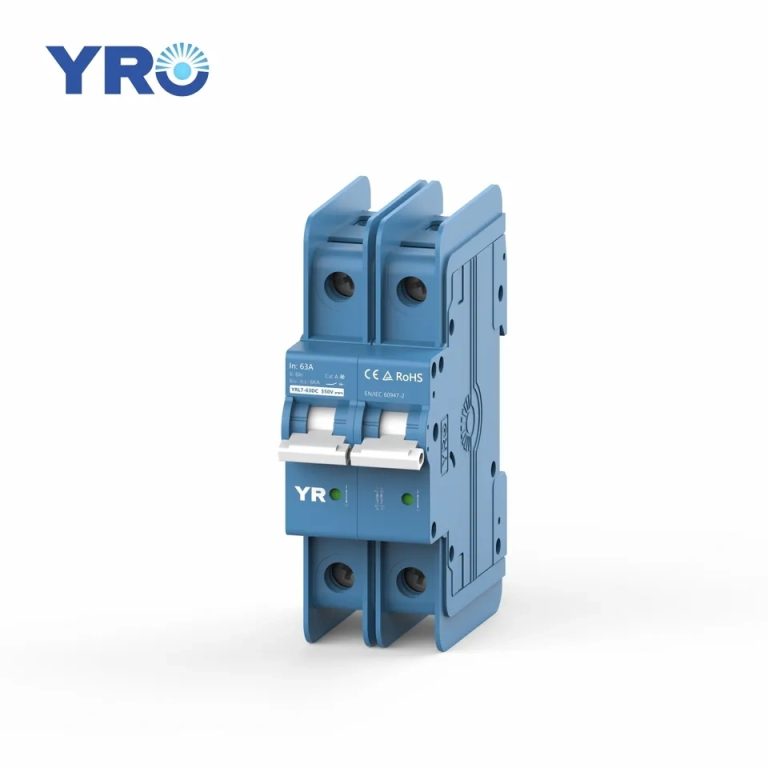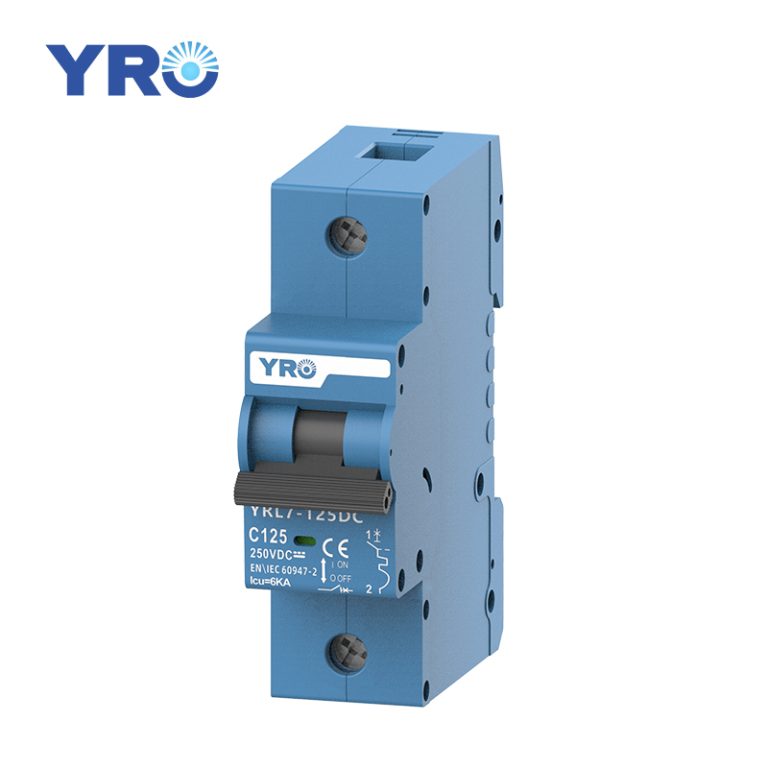






Electrical abnormalities caused by lightning strikes, are a situation that is relatively easy to be misunderstood among the reasons for disjoncteur trips.
Many users believe that circuit breakers will only trip when they are overloaded or have problems with themselves. However, during thunderstorms, even if the circuit breaker is correctly selected and installed properly, tripping may still occur.
In fact, this situation is often not a fault; instead, it indicates that the circuit breaker is working properly.

Why Can Distant Lightning Strikes Also Cause Damage?
There is an easily overlooked scenario in lightning protection: even if lightning does not directly strike a building or power lines, it can still affect the electrical system.
The voltage waves generated during a thunderstorm travel rapidly along transmission lines, lightning protection wires, or underground metal pipelines, reaching distribution equipment hundreds of meters or even kilometers away. The voltage on the line rises sharply within an extremely short period, creating a transient overvoltage (surge) that enters the building’s internal power grid.
Therefore, most lightning-induced disjoncteur tripping is not due to direct lightning strikes but rather surges generated by lightning induction.
How Does Transient Overvoltage Affect Circuit Breaker Operation?
Although transient overvoltage lasts only at the microsecond or millisecond level, its amplitude far exceeds the normal operating level of the system.
In this case, the following changes may occur simultaneously inside the circuit breaker:
- Sudden voltage changes cause abnormal instantaneous current
- The internal electromagnetic force increases sharply
- The security protection agency has detected an abnormal operating status
Overvoltage or inrush current can be detected by the overcurrent/overvoltage relay inside the circuit breaker. These protection mechanisms will send abnormal signals to the tripping coil or control system, thereby triggering a trip.

The More Sensitive the Load, The More Prone It Is to Tripping During a Lightning Strike
Under the influence of transient overvoltage or surge currents generated by lightning, the more sensitive the load (i.e., the lower its tolerance to voltage and current fluctuations), the more likely the circuit breaker is to trip.
Characteristics of Sensitive Loads
| Load Type | Tolerance to Voltage/Current Fluctuations | Common Examples |
| Electronic/Communication Equipment (PLCs, servers, inverters, PV inverters, etc.) | Rated voltage deviation ±5 % or even smaller; highly sensitive to transient surge currents | Data centers, industrial automation systems |
| Precision Instruments (measuring instruments, experimental equipment) | Extremely low tolerance to transient overvoltage, often equipped with surge protectors | Laboratory instruments, measurement devices |
| Motors/Frequency Drives | Higher tolerance requirements for voltage dips and transient voltage spikes; surge currents can cause loss of synchronization or damage to power components | Large fans, pumps, compressors |
| General Lighting, Socket Loads | Relatively higher tolerance to transient voltages; occasional surges are less likely to cause tripping | Household lighting, standard sockets |
Why Are Sensitive Loads More Likely to Cause Circuit Breaker Tripping?
When a lightning strike occurs, the transient overvoltage it causes will generate inrush current, transient recovery voltage and high-frequency oscillation inside the circuit breaker. The more sensitive the load equipment is to voltage and current fluctuations, the more likely its internal protection circuit is to be triggered when subjected to an impact, and it will feed back a fault signal to the power grid, causing the circuit breaker to trip.
To reduce the risk of false tripping caused by load sensitivity, a series of protective measures can be taken, including installing surge protection devices, selecting equipment with overvoltage protection functions, and establishing a complete lightning protection grounding system. These measures can effectively enhance the overall reliability and operational stability of the electrical system.

The Importance of System Coordination in Lightning Protection
Disjoncteurs are only one part of the electrical protection system, not the entirety.
When lightning surges occur, the stability of the system largely depends on whether there is good coordination among different protective devices.
Reasonable System Coordination Can:
- Divert energy before surges reach the circuit breaker.
- Reduce the instantaneous impact on the circuit breaker.
- Improve the overall stability of the power supply system.
Without such an integrated design, the circuit breaker may be forced to withstand surge pressures beyond its intended role, leading to more frequent tripping.
The Importance of Circuit Breaker Design and Quality Under Lightning Strike Conditions
The performance of different disjoncteurs in lightning strike environments is not exactly the same.
Design details such as contact structure, arc extinguishing system, and tripping setting method will all affect the response mode of circuit breakers in transient events.
Circuit breakers with stable performance and mature design usually have the following characteristics:
- It can remain stable in short-term electrical disturbances
- Act quickly and decisively when the threshold is exceeded
- Still has reliable reset capability after a lightning strike event
Overly sluggish circuit breakers may amplify the risk of equipment damage.

Conclusion
Lightning strikes causing circuit breakers to trip are usually the result of the combined influence of multiple factors, including transient overvoltage and responsible sensitivity.
In most cases, this kind of tripping is not a device failure but a normal response of the electrical protection system under abnormal conditions.
Through reasonable system design, appropriate protective measures and stable-performance circuit breakers, the number of trips caused by lightning strikes can be reduced while ensuring safety.