





The answer is: Yes.
In PV systems, circuit breakers are typically installed on the AC output side of the inverter, and some are also used on the DC side of the solar system with dedicated DC circuit breakers. However, circuit breakers cannot replace all the protective devices in a PV system. They have clear functional boundaries. If used incorrectly, it may lead to insufficient protection or even damage to the equipment.
Why Do PV Systems Still Use Circuit Breakers?
Although modern solar inverters typically integrate certain electronic protection functions, many PV systems are still configured with physical electrical circuit breakers or isolation devices, primarily for overcurrent protection, fault isolation, and meeting maintenance safety requirements. The specific configuration approach usually depends on the inverter design, system architecture, and local electrical codes.
Internal inverter protection typically relies on the normal operation of the electronic control system, while a circuit breaker is an independent electromechanical protective device. Under certain abnormal conditions, such as a control system fault or failure of the protection logic to respond properly, an external circuit breaker may provide additional independent protection capability.
In PV DC circuits, DC arcs are typically more difficult to extinguish than AC arcs, so the relevant equipment needs to have breaking capacity suitable for DC systems.

Why Are Circuit Breakers Typically Installed on the AC Side?
Many electrical regulations and inverter manuals mention AC side overcurrent protection. However, specific requirements may vary depending on the country, inverter brand, and local electrical regulations. Therefore, installation still needs to be based on local standards and manufacturer requirements.
But there is a consistent situation: AC electrical circuit breakers often serve as the disconnect point between the inverter and the power distribution system.
When technicians need to maintain the equipment, the circuit breaker can achieve safe isolation. This is why AC circuit breakers for solar inverters are widely used in residential and commercial photovoltaic systems.
Can Circuit Breakers Be Used on the PV DC Side?
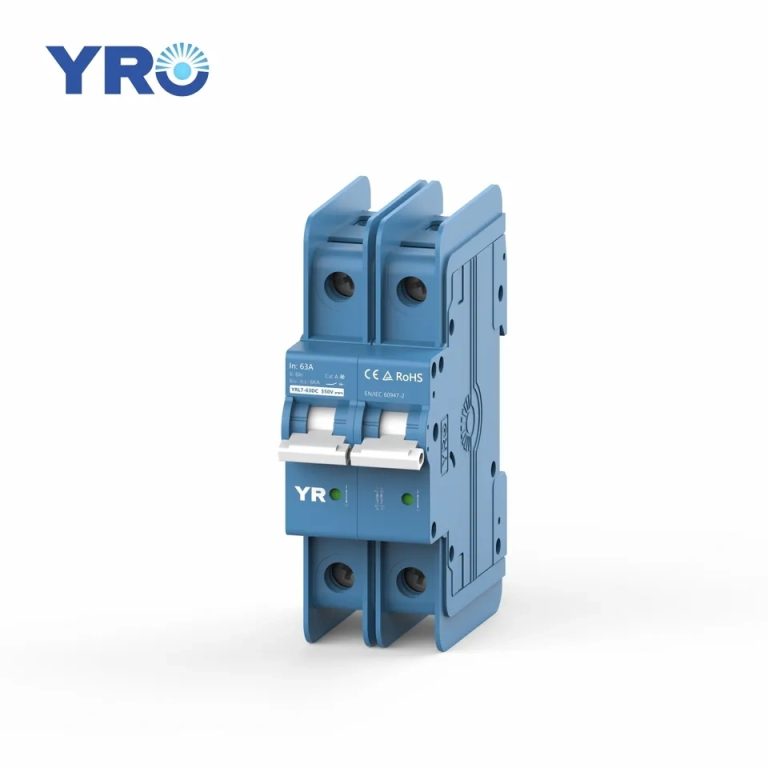
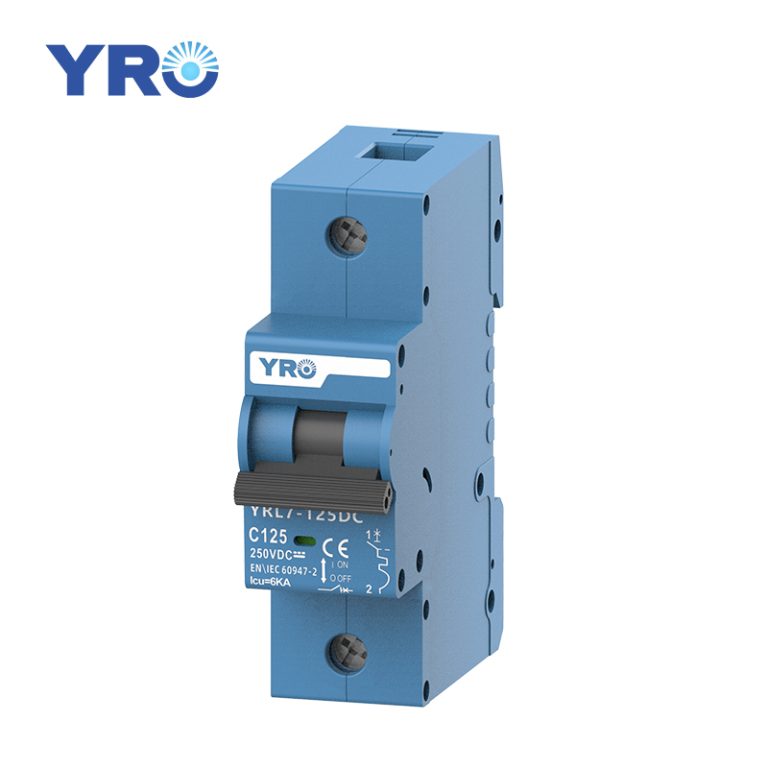
Yes, but there is one important prerequisite — a specialized DC circuit breaker must be used.
As we mentioned earlier, the arc generated by direct current is more difficult to extinguish than that generated by alternating current, so ordinary AC circuit breakers are not suitable for DC circuits.
DC circuit breakers used in solar systems are marked with a clear voltage rating and meet the protection requirements related to PV.
Using an AC circuit breaker directly in a DC line without corresponding adaptation is generally not considered a reasonable engineering practice.
Why Cannot a Circuit Breaker Alone Provide Complete Inverter Protection?
Many people mistakenly believe that installing a mcb electrical breaker means the inverter is completely protected. However, in reality, photovoltaic systems are far more complex than imagined.
Circuit breakers mainly address overcurrent and short-circuit issues, while photovoltaic systems may face other risks, such as:
- Lightning surge
- Grid voltage fluctuations
- DC arcing faults
- Connector faults
- Grounding abnormalities
For example, if a lightning strike causes a surge, even if the mcb electrical breaker does not trip, the precise electronic components inside the inverter may still be damaged. In this case, surge protectors are often more important than circuit breakers.
Similarly, during maintenance, isolator switches may still be necessary because they can provide a clearly visible disconnected state.
This is why professional photovoltaic systems usually use a combination of multiple protection devices rather than relying on a single product.

How Do Circuit Breakers Help PV Inverters Operate More Safely?
Although mini circuit breakers have functional boundaries, their role in PV systems remains very important.
When selected and installed correctly, they can help:
- Cut off abnormal fault currents
- Improve maintenance safety
- Prevent line damage due to overcurrent
- Reduce risks under abnormal operating conditions
For installers, wholesalers, and EPC companies, selecting circuit breaker products suitable for the PV environment is generally more conducive to stable system operation.
Conclusion
Din rail breakers can indeed be used in solar inverters, but the answer is not simply “yes” or “no”.
In many photovoltaic systems, breakers play an important role in overcurrent protection. AC breakers are usually used on the output side of the inverter, while DC breakers may also be used for the photovoltaic array, but only if they have the correct DC rated parameters.
At the same time, breakers cannot be regarded as a complete protection solution. A safe and reliable PV inverter system often requires the cooperation of multiple protection devices. Manufacturer instructions, electrical specifications, and the actual installation environment all affect the final solution.