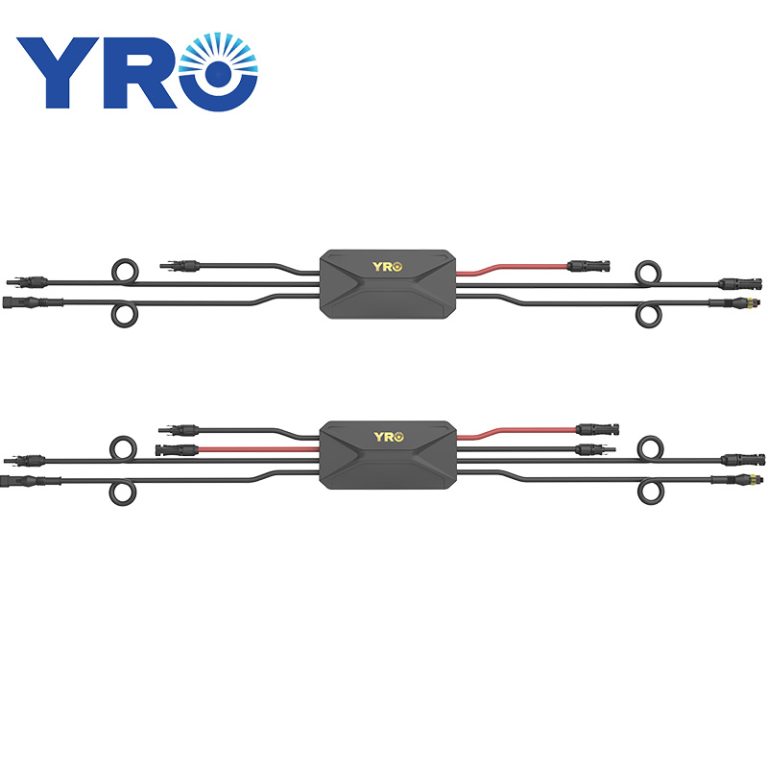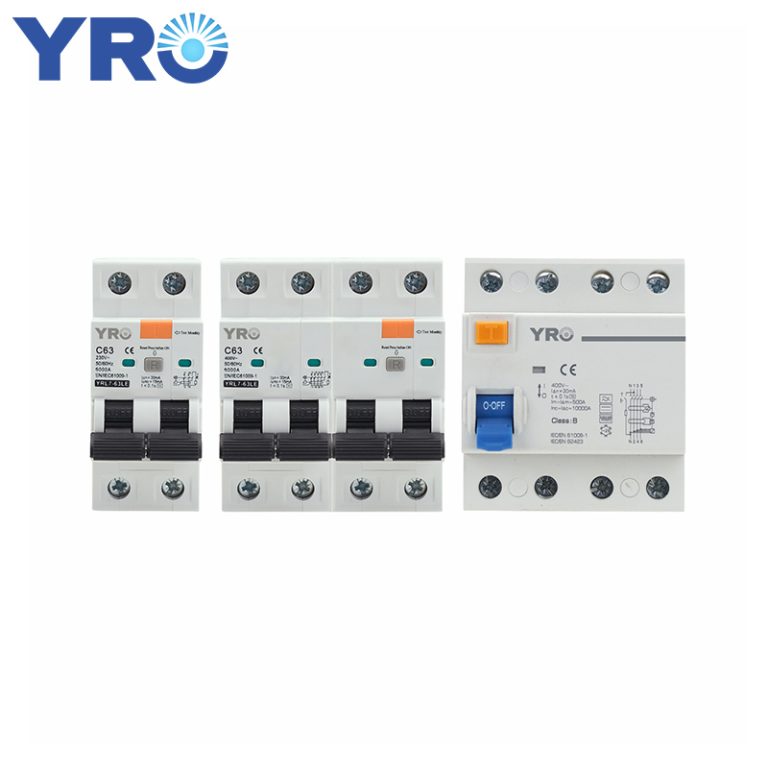






As commercial rooftops, warehouses, logistics centers, and industrial facilities keep adding photovoltaic capacity, the conversation around rapid shutdown has moved from “whether to install it” to “what it will cost.” If you are budgeting a large PV array, you have probably noticed there is no single sticker price for a rapid shutdown device. That is not a quoting tactic—it reflects how these components are specified, sourced, and commissioned. This guide walks through the factors that shape rapid shutdown device cost so you can build a realistic budget and ask the right questions of your supplier. If you are weighing options for a specific site, our breakdown of rapid shutdown devices for commercial rooftop solar projects is a useful companion read.

Why Rapid Shutdown Pricing Is Project-Dependent, Not a Fixed Unit Price
At first glance, a rapid shutdown device looks like a small switch, so it is tempting to expect a small, fixed price. In practice, solar rapid shutdown cost behaves more like a system line item than a catalog part. The same module-level unit can land at very different totals depending on how many you need, how your array is wired, what your inverter expects, and which compliance marks the authority having jurisdiction will accept. Thinking in terms of a single “rapid shutdown device price” usually understates the budget and surprises buyers at the procurement stage.
The more useful mental model is a chain: unit price → quantity → system architecture → installation → compatibility → certification → long-term O&M. Each link adds cost or removes it, and the weight of each link changes with your project size and site. The sections below expand each link so you can see where your money actually goes.
The 7 Factors That Shape Rapid Shutdown Device Cost
1. Unit Price — Device Level and Topology
The starting point for any rapid shutdown device pricing exercise is the device itself, and the biggest fork in the road is topology. A module-level rapid shutdown device sits at or near each panel and isolates voltage at the module, which is the most conservative interpretation of modern firefighter-safety rules. A string-level unit shuts down at the string or combiner, covering more panels per device and typically lowering the per-module hardware cost. The module level rapid shutdown cost is higher per point of isolation but can simplify certain compliance arguments; the string level rapid shutdown cost is usually lower in hardware but depends on how your strings are laid out. Neither is “better” in the abstract—the right choice is the one your site geometry and local code path support.
2. Quantity and Project Scale
Once topology is set, quantity drives the bill faster than almost anything else. A 50 kW rooftop and a 2 MW distribution-center array do not differ by a little—they differ by orders of magnitude in the number of isolation points, enclosures, and trunk runs. The encouraging news is that commercial solar RSD purchases usually benefit from volume: per-unit pricing, shared shipping, and consolidated commissioning all improve as the bill of materials grows. When you request a quote, lead with the module count and string count rather than a vague “we need rapid shutdown,” because that detail is what lets a supplier return a real number instead of a placeholder.
3. System Architecture
Architecture is where rapid shutdown installation cost and hardware cost start to blur. A centralized layout with tidy combiner boxes is cheaper to wire than a fragmented array spread across multiple roof planes, skylights, and shading zones. If your design already includes power electronics near the modules, a string-level rapid shutdown layer may integrate cleanly; if not, you are paying for additional enclosures and home-run cabling. The architectural decision you make on the drawing board is therefore one of the largest levers on the final price, often more so than the device sticker itself.

4. Installation Labor and Balance of System
Rapid shutdown installation cost is easy to forget because it sits outside the hardware line, yet on many commercial jobs it rivals the device cost. Labor scales with roof access, the number of attachment points, conduit runs, and whether the crew is coordinating with a larger EPC schedule. Sites with limited staging, height restrictions, or live operations underneath (cold-storage roofs, busy factories) add hours quickly. The practical takeaway: when you compare two quotes, separate the device price from the installed price, because a cheaper unit that needs twice the labor is not the cheaper project.
The wider move toward energy-storage retrofits, carports, and agrivoltaics has also widened the range of site conditions a rapid shutdown layer must handle. More varied mounting and more mixed-use roofs mean more custom trunking and labeling work, which quietly raises the installed total even when the unit price stays flat.
5. Compatibility With Your Inverter and Modules
Compatibility is the factor that turns a “great price” into a “wrong purchase.” Rapid shutdown must handshake with your inverter’s shutdown signaling and, where applicable, with module-level electronics. A 3-in-1 solar optimizer with rapid shutdown and monitoring can consolidate functions and reduce the number of separate boxes, but only if your string architecture and monitoring plan are built around it. Mismatched signaling standards mean adapters, firmware workarounds, or a redo—all of which cost more than confirming compatibility up front. Always share your inverter make and model with the supplier before pricing is finalized.
6. Certification and Compliance
Compliance is not paperwork you add at the end; it is baked into the unit cost from the factory. Devices built to UL 1741, listed for NEC 2020 Article 690.12, and supported by TÜV or CE documentation carry engineering and testing overhead that uncertified alternatives do not. For commercial solar RSD, the authority having jurisdiction and the insurer will almost always ask for these marks, so specifying them early protects you from a costly swap later. Our deeper look at rapid shutdown device certifications and standards covers exactly which documents to request before purchase.
7. Long-Term O&M, Monitoring, and Warranty
The last link is the one that shows up years after commissioning. Solar RSD cost should include the support structure behind the device: warranty length, spare-part availability, remote monitoring, and the supplier’s responsiveness when a string faults. A unit that is a few dollars cheaper but ships with a thin warranty and no local support can cost far more across a 20-year asset life than a slightly premium device backed by an established manufacturer. For fleets of sites, standardize on one qualified platform so your O&M team learns it once.
Rapid Shutdown Cost Factors at a Glance
The table below summarizes where cost enters the chain so you can sanity-check a supplier’s proposal against your own bill of materials.
| Cost link | What moves the price | Buyer action |
|---|---|---|
| Unit price | Module-level vs string-level topology | Match topology to code path |
| Quantity | Module and string counts | Request volume pricing |
| Architecture | Roof planes, combiner layout, cabling | Simplify layout on drawings |
| Installation | Roof access, labor, BOS | Separate device vs installed price |
| Compatibility | Inverter and module signaling | Share inverter model early |
| Certification | UL 1741, NEC 2020, TÜV, CE | Confirm marks before PO |
| Long-term O&M | Warranty, monitoring, support | Standardize one platform |
Building a budget for a real site?
YRO’s engineering team has spent over a decade supplying rapid shutdown and PV protection components to commercial and industrial projects across 110+ countries. Send us your module count, string layout, and inverter model, and we will return a transparent, itemized rapid shutdown device pricing estimate—no generic number, no surprise line items.
Frequently Asked Questions
Do rapid shutdown devices require ongoing software subscriptions or licensing fees?
Most hardware rapid shutdown devices do not carry a recurring software fee—the shutdown logic lives in the device and the inverter, not in a paid cloud service. The exception is platforms that bundle remote monitoring, fleet analytics, or firmware management behind a subscription. When you compare commercial solar rapid shutdown cost, ask explicitly whether any monitoring feature is gated by an annual license, because that recurring line is easy to miss in a hardware-only quote and changes the true lifetime cost.
Can I mix rapid shutdown devices from different brands in one commercial array?
Mixing brands is possible only when every device and the inverter speak the same shutdown-signaling standard (for example SunSpec RSS over Modbus). Even then, blended fleets complicate commissioning, troubleshooting, and warranty claims, because no single vendor owns the full signal path. For a single commercial site, standardizing on one qualified supplier is usually cheaper to operate than a mixed brand approach, even if the initial hardware quotes look similar.
How do rapid shutdown requirements differ between rooftop and ground-mount commercial systems?
Both must satisfy the same core safety rule—controllable isolation of PV conductors—but the implementation cost differs. Rooftops add access, fall-protection, and penetrative mounting labor, while ground-mount arrays trade that for longer cable runs and combiner-field wiring. The module count may be identical, yet the rapid shutdown installation cost can swing noticeably because the expensive part is the labor and trunking, not the device.
Are rapid shutdown devices eligible for commercial solar incentives or tax treatment?
In many regions, rapid shutdown is treated as part of the qualifying PV electrical system rather than a separate deductible item, so it can fall under the same capital treatment as the rest of the array. Exact rules vary by jurisdiction and by whether the component is safety-mandated versus optional. Because this touches tax and incentive eligibility, confirm with your local tax advisor and the incentive administrator rather than assuming—the answer is project- and location-specific.
What happens to rapid shutdown cost if my project is phased or expanded later?
Phased builds almost always cost more per watt of rapid shutdown than a single committed order, because you lose volume pricing and pay for design rework and re-commissioning on each phase. If expansion is likely, the cheapest path is to specify a topology and supplier that scales—buy the signaling backbone once and add isolation points later. Tell your supplier the full planned capacity up front even if phase one is small, so the quote protects your future phases.
Do string-level and module-level rapid shutdown devices need different inverter types?
Not necessarily different inverter brands, but they do rely on different signaling interfaces. String-level shutdown often coordinates through the inverter’s built-in rapid-shutdown port, while module-level schemes may use PLC or a separate initiator tied to the balance of system. Before pricing, confirm that your chosen inverter exposes the correct shutdown interface for the topology you prefer; an inverter without the right port can force a more expensive device choice than the array otherwise needs.
Related Resources
Continue building your specification with these related guides from the YRO knowledge base:
- How NEC 2020 rapid shutdown requirements are reshaping modern PV system design
- Module-level rapid shutdown explained: why it is becoming the future of solar safety
- How to select a rapid shutdown device for different solar PV applications
- Rapid shutdown vs solar optimizer: do you need both in a modern PV system?
- Rapid shutdown device certifications and standards: what to verify before purchase
This guide was prepared by the YRO engineering and product team. YRO (Zhejiang YRO New Energy Co., Ltd.) is a manufacturer of PV protection components—rapid shutdown devices, combiner boxes, DC circuit breakers, surge protectors, and isolator switches—built to UL 1741, TÜV, CE, and ISO 9001 standards and supplied to commercial and industrial projects in 110+ countries. Specifications and pricing vary by project; consult a qualified professional for site-specific design.