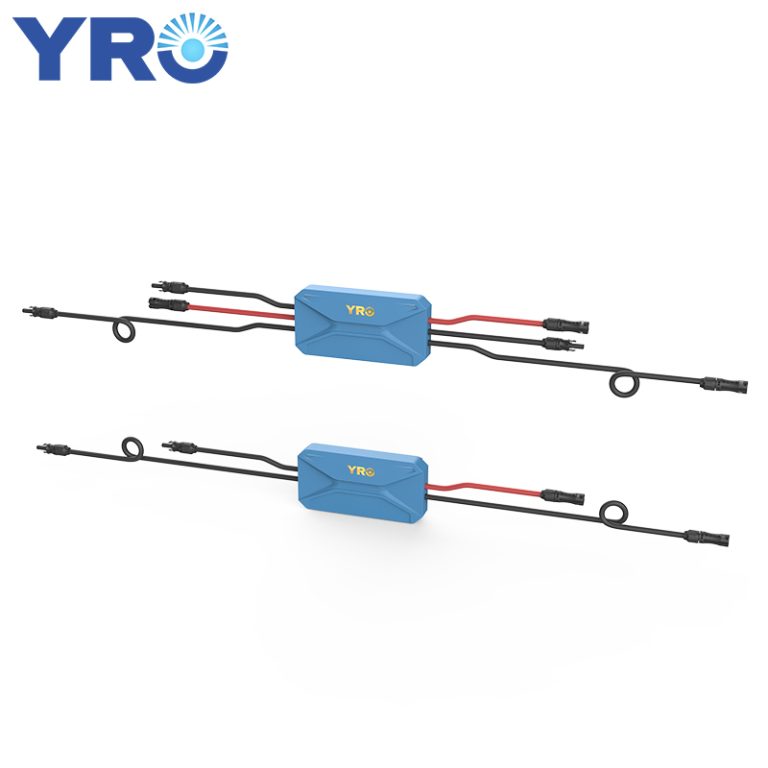
Upgrading an existing solar array with rapid shutdown is rarely a simple swap. If you are planning a retrofit, the question is not just “how much does a rapid shutdown device cost,” but what actually drives your total upgrade budget. Every older system is wired, mounted, and permitted differently, so the same hardware can land at very different totals. This guide breaks down the real cost drivers of a rapid shutdown retrofit—from inverter compatibility to roof access—so you can budget with confidence and avoid surprise electrical work.
What Affects the Cost of a Rapid Shutdown Retrofit?
When you add rapid shutdown to an existing system, the budget is shaped by the same variables that defined the original install—except now you are working around what is already there. Four factors move the number most: how many points need isolation, the size and topology of your array, how easy the site is to access, and what your current equipment already supports.
On an older rooftop, the number of module-level rapid shutdown devices is the single biggest line item, because each panel or pair of panels may need its own switch. A string-level rapid shutdown approach covers more panels per device, which can lower hardware count—but only if your layout and local code allow it. System size, roof pitch, and whether panels are grouped in easy-to-reach strings all change how many labor hours the job takes.
The differentiator in a solar rapid shutdown retrofit is constraint, not catalogue price. A 50 kW array on a low-slope warehouse roof with accessible conduit runs will almost always cost less per kilowatt than the same capacity on a steep, shaded residential roof where installers are working around existing racking and live circuits.
Can Your Existing Inverter Work With a Rapid Shutdown System?
This is the question that decides whether your retrofit stays small or grows. Many legacy inverters were commissioned before rapid shutdown rules existed, so they may not speak the signalling protocol a modern shutdown system expects. If the inverter cannot acknowledge module- or string-level shutdown commands, you are looking at either a communication bridge, a different device family, or—in the worst case—an inverter replacement.
Rapid shutdown system compatibility hinges on three things: the inverter brand and firmware generation, the signalling method the rapid shutdown devices use (power-line communication, wireless, or a dedicated signal line), and whether the manufacturer publishes a certified compatibility list. A PV optimizer with integrated rapid shutdown and monitoring can sometimes simplify this, because it manages shutdown at the module while reporting status back through a controller that does not depend on the original inverter’s protocol.
Before you price the job, pull the inverter model and firmware version. If it is on a modern rapid shutdown compatibility list, your equipment cost stays low. If it is not, budget for the bridge hardware or a partial inverter upgrade—that single decision can swing the project by a wide margin when adding rapid shutdown to existing solar system installations.
Not Sure If Your Inverter Is Compatible?
YRO’s engineering team helps B2B buyers and installers confirm rapid shutdown compatibility for legacy inverters—and recommends the lowest-cost path that stays compliant.
Equipment Costs vs. Installation Costs
A common budgeting mistake is treating “rapid shutdown” as one cost. In practice it splits into hardware you can quote from a datasheet and labor that depends entirely on your site. Separating the two helps you see where a retrofit can be trimmed and where cutting corners backfires—and it is the clearest way to read any rapid shutdown installation cost estimate a supplier sends you.
| Budget line | What you are paying for |
|---|---|
| RSD devices | Module- or string-level switches, one per isolation point. |
| Controller / gateway | The unit that issues the shutdown command and reports status. |
| Cabling & connectors | Signal lines, extensions, and MC4 or equivalent connectors. |
| Labor | Roof time, panel access, and working around live circuits. |
| Testing & commissioning | Functional shutdown test and sign-off with the AHJ. |
Equipment is the predictable part. Installation is where retrofits diverge: two sites with identical hardware can have labor costs that differ by two or three times based on access and existing wiring. Note that DC circuit breakers and other protection devices are sometimes already present and can be reused, which trims the equipment list—but only after an electrician confirms they still meet the revised configuration.
When Does a Retrofit Require Additional Electrical Work?
Not every retrofit is a bolt-on. The moment your existing wiring cannot safely carry the new shutdown topology, the project becomes an electrical upgrade—and that is where budgets expand fastest. This is also the part of a solar system electrical upgrade cost that surprises buyers who only priced the devices.

First, rewiring: if the original array has no accessible conductor between modules and the combiner, installers may need to add a signal or power line, which means opening strings and re-terminating connections. Second, equipment replacement: aging صناديق الجمع الكهروضوئية or disconnects that no longer match the new layout often have to be swapped rather than reused. Third, local permit requirements: some authorities having jurisdiction require a fresh electrical review when rapid shutdown is added to a legacy system, which brings inspection fees and possible corrective work.
The honest way to control this is to scope it early. A retrofit that discovers mid-job that the combiner box must be replaced will always cost more than one that planned for it from the quote stage.
How to Estimate Your Solar Rapid Shutdown Retrofit Budget
You do not need an engineer to produce a first-pass budget—you need the right information. Before requesting quotes, walk the site and collect the details suppliers actually use to price the job. The checklist below turns a vague “how much?” into a number you can defend, and it is the foundation of any reliable rapid shutdown retrofit cost estimate.
| Information to collect | Why it changes your budget |
|---|---|
| Number of panels & strings | Sets the count of RSD devices and controllers. |
| Inverter model & firmware | Decides compatibility and possible bridge or upgrade. |
| System layout & racking | Drives labor hours and roof-access difficulty. |
| Existing wiring & combiner | Reveals rewiring or equipment-replacement needs. |
| Local code & AHJ rules | Sets testing, inspection, and certification cost. |
Hand this list to a supplier and you will get a budget built on facts instead of guesses. It also protects you: a quote that ignores your inverter model or roof access is a quote that will change later.
Retrofitting rapid shutdown is less about a device price and more about how your existing system is built. Your inverter, wiring, roof access, and local permits decide whether the project is a quick add-on or a fuller electrical upgrade. Before you request quotes, walk your array with the checklist above and gather the details suppliers actually need. YRO supports B2B buyers and installers with UL 1741- and TÜV-certified rapid shutdown hardware and hands-on engineering backing—reach out to size a retrofit that fits both your budget and your compliance goals.
Build a Retrofit Budget You Can Defend
YRO supplies UL 1741- and TÜV-certified rapid shutdown hardware with OEM/ODM support for B2B projects. Send us your inverter model, array size, and layout—we will size the right retrofit and quote it transparently.
Frequently Asked Questions
How long does a rapid shutdown retrofit usually take from start to finish?
For a typical commercial rooftop, design and procurement take one to three weeks, and on-site installation runs one to four days depending on array size and access. Inspection and sign-off add a few days to a couple of weeks depending on your AHJ’s schedule. A site with clean documentation and a compatible inverter finishes fastest; an older system needing rewiring or a fresh electrical review will sit in the queue longer.
Will adding rapid shutdown affect my existing solar or inverter warranty?
It can, which is why compatibility matters. If the retrofit follows the inverter manufacturer’s published rapid shutdown guidance and uses certified devices, most warranties stay intact. Unapproved modifications—such as tapping unprotected conductors or replacing native components—can void coverage. Always confirm with the inverter maker and keep commissioning records as proof the work was done to spec.
Do I need a permit or inspection for the retrofit, and who handles it?
In most jurisdictions yes. Adding rapid shutdown to a legacy array typically triggers an electrical permit and a final inspection by the authority having jurisdiction, since you are altering a live PV system. Your installer usually pulls the permit and schedules inspection, but the cost and timeline should be in your quote. Skipping this step risks failed inspections and lost compliance status.
Can rapid shutdown be retrofitted on ground-mounted or carport arrays, not just rooftops?
Yes. The same module- and string-level devices apply to ground-mount, carport, and floating systems. The cost drivers shift—ground arrays are easier to access (lower labor) but may span longer conductor runs (more cabling). The key is whether each isolation point can be reached and wired safely, not the mount type itself.
Is module-level or string-level rapid shutdown better for an older array retrofit?
It depends on what your array and code require. Module-level isolates voltage at each panel, which satisfies the strictest interpretations and is often the safe default for mixed or older layouts. String-level covers more panels per device and can lower hardware count, but only where the AHJ accepts it. Match the choice to your compliance needs, not just price.
Can rapid shutdown be added to a hybrid or battery-backed solar system?
Usually yes, but battery systems add a second shutdown boundary—the storage side—that must also be addressed. The retrofit scope then covers both the PV array and the battery disconnect path. Confirm that the chosen rapid shutdown devices and controllers are rated for systems with storage, and that the inverter’s islanding and shutdown logic remain compliant after the change.
Will the retrofit reduce my system’s energy yield or efficiency?
Properly specified devices have a negligible effect on yield. Module-level units add a tiny series voltage drop, but modern components are designed to keep this within tolerance. The bigger risk to output is poor installation—loose connectors or mismatched strings—so commissioning tests matter. If efficiency loss appears after retrofit, it usually points to a wiring or configuration error, not the devices themselves.
Do rapid shutdown devices need regular maintenance or remote monitoring?
The switches themselves are largely passive and need little maintenance, but monitoring pays off. A controller with status reporting lets you catch a failed module-level device before it becomes a compliance gap. A simple annual visual and functional test—confirmed during scheduled O&M—keeps the system inspection-ready and protects uptime.
Which certifications matter most when selecting retrofit rapid shutdown hardware?
Look for UL 1741 (North America), TÜV, and IEC compliance for safety and interoperability, plus ISO 9001 from the manufacturer as a quality baseline. Regional marks (such as CE for Europe) matter where you operate. Certifications are not paperwork—they signal the device will pass inspection and behave correctly under fault conditions, which protects your budget from rework.
Can the retrofit be done in phases, or does the whole array need upgrading at once?
Phasing is often possible and can spread cost. You might retrofit one roof section or string group first, then expand later—provided the design keeps each phase independently compliant and the controller can scale. The trade-off is duplicated mobilization labor across phases. For a single building, doing it in one pass is usually cheaper overall, but phased rollouts suit multi-site portfolios.