





In 2026, solar fire safety has moved from a compliance checkbox to a competitive differentiator for B2B solar. If you design, install, procure, or distribute photovoltaic (PV) systems, you have almost certainly felt the shift: authorities having jurisdiction (AHJs), insurers, and firefighter associations now expect Schnellabschaltgeräte as standard, not optional. In this guide we break down the solar fire safety trends defining 2026 and explain why rapid shutdown technology is becoming the backbone of safe, insurable, and code-ready commercial solar. You also get a practical spec checklist and a side-by-side comparison to help you choose the right architecture for your next project.
The 2026 Regulatory Picture
Three forces are converging in 2026. First, the National Electrical Code (NEC) Article 690.12, rapid shutdown of PV systems, has been adopted in whole or part by the large majority of U.S. states, with NEC 2023 raising the bar on controlled-conductor limits. Second, local AHJs are interpreting the code more strictly, and many now require module-level protection on rooftops where firefighters may work close to energized equipment. Third, insurers are beginning to factor rapid shutdown into premium calculations for commercial arrays.
What this means for you: designing to the strictest applicable edition, often NEC 2023, is now the safest path to fast approvals. If you want the full breakdown of why this matters for rooftops specifically, our commercial rooftop solar rapid shutdown guide goes deeper. When you specify equipment, look for solutions tested to the relevant NEC edition and listed to UL 1741, credentials that AHJs recognize immediately.
Why Firefighters and AHJs Are Pushing Rapid Shutdown
Traditional PV arrays stay energized, often at hundreds of volts, even after the inverter shuts down, because DC conductors between panels and the combiner remain live. For a firefighter cutting a roof vent, that is a hidden, lethal hazard. Rapid shutdown collapses array voltage to a safe level at the module or string boundary the moment an emergency signal is triggered.
In 2026 the expectation is shifting from “acceptable if addressed” to “expected by default.” More municipalities are writing rapid shutdown into their permitting requirements, and firefighter training now assumes arrays can be de-energized on demand. Specifying rapid shutdown up front removes a common cause of permit delays and inspection failures.

Module-Level vs String-Level Rapid Shutdown
Not all rapid shutdown is equal. The two dominant architectures are:
- Module-level (MLPE): brings every individual panel to a safe voltage. Maximum safety, required in the strictest jurisdictions, higher per-watt cost.
- String-level: isolates the entire string at the combiner box. Lower cost, suitable for ground-mount and lower-risk layouts.
Here is the practical comparison:
| Factor | Module-Level (MLPE) | String-Level |
|---|---|---|
| Shutdown granularity | Per module, every panel safe | Per string, at the combiner |
| Firefighter safety margin | Highest | Good, where strings are accessible |
| Relative cost | Higher per watt | Lower per watt |
| Best use case | Complex commercial rooftops, strict AHJs | Ground-mount, lower-risk layouts |
| Typical certification | UL 1741, module-level listed | UL 1741, string-level listed |
Both approaches are valid, your choice depends on jurisdiction, roof type, and budget. Explore our module-level rapid shutdown (MLPE) Und string-level rapid shutdown product lines to see certified options for each architecture.
Compare rapid shutdown architectures for your project
Tell us your roof type, jurisdiction, and array size, and we will map you to the right module-level or string-level solution from the YRO lineup.
Rapid Shutdown and Energy Storage / Hybrid Systems
As more commercial sites add battery storage, the question you should ask is whether your shutdown strategy covers the whole DC system, not just the panels. A 2026-ready design de-energizes both the array and the battery-coupling points when triggered.
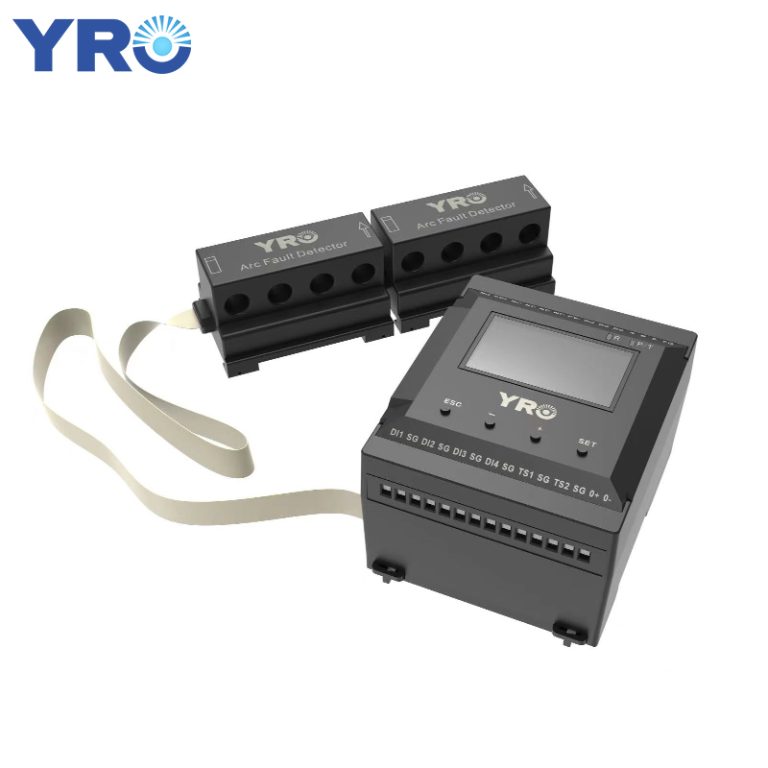
Pairing rapid shutdown with supervised inverters and a documented emergency interface also strengthens your site’s resilience story for clients and insurers. If your balance of system already includes smart combiner and protection gear, integration is usually straightforward.
What to Look for in a 2026-Ready Rapid Shutdown Solution
When you evaluate products, use this shortlist:
- Certification: UL 1741 listing and compliance with the adopted NEC edition.
- Environmental rating: IP68 for outdoor and rooftop duty.
- Monitoring: state and health visibility so you can prove compliance and catch faults early.
- Build quality and warranty: industrial-grade components and a warranty that matches your project lifecycle.
- Integration: dry-contact or gateway support for fire-alarm linkage.
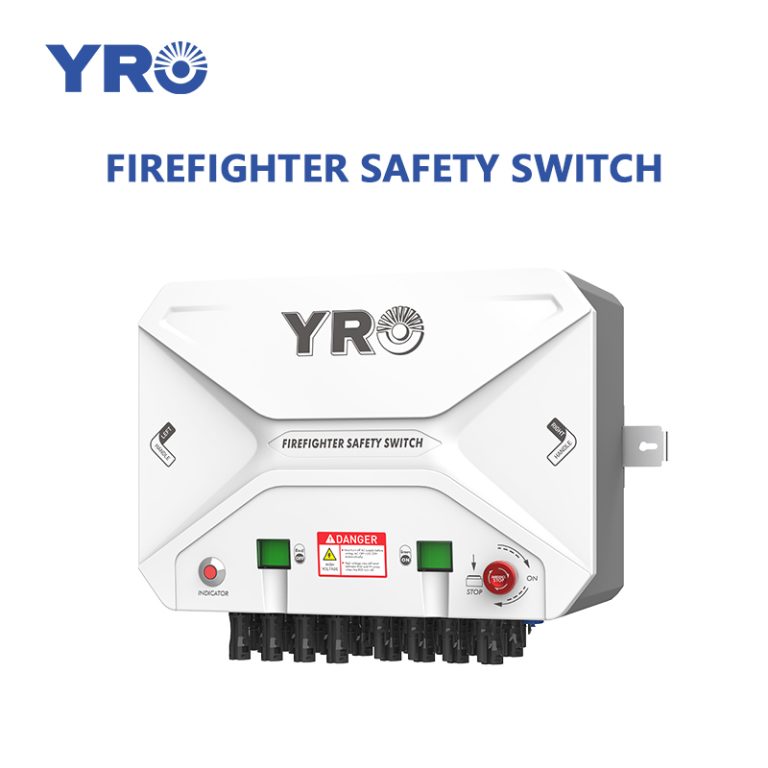
Our Schnellabschaltgeräte are engineered for exactly these requirements, and the YRO Module Level Firefighter Safety Switch (IP68) is a strong default for rooftop B2B deployments.

Request a B2B quote for YRO rapid shutdown
Get a tailored quotation and lead time for your project volume, with certification and integration details included.
Cost and ROI Considerations for B2B Buyers
Buyers often ask whether rapid shutdown is worth it. The honest answer: it is usually a low single-digit percentage of BOS cost, frequently offset by faster approvals, lower insurance premiums, and reduced liability. Module-level costs more per watt than string-level, so model it against your financing.
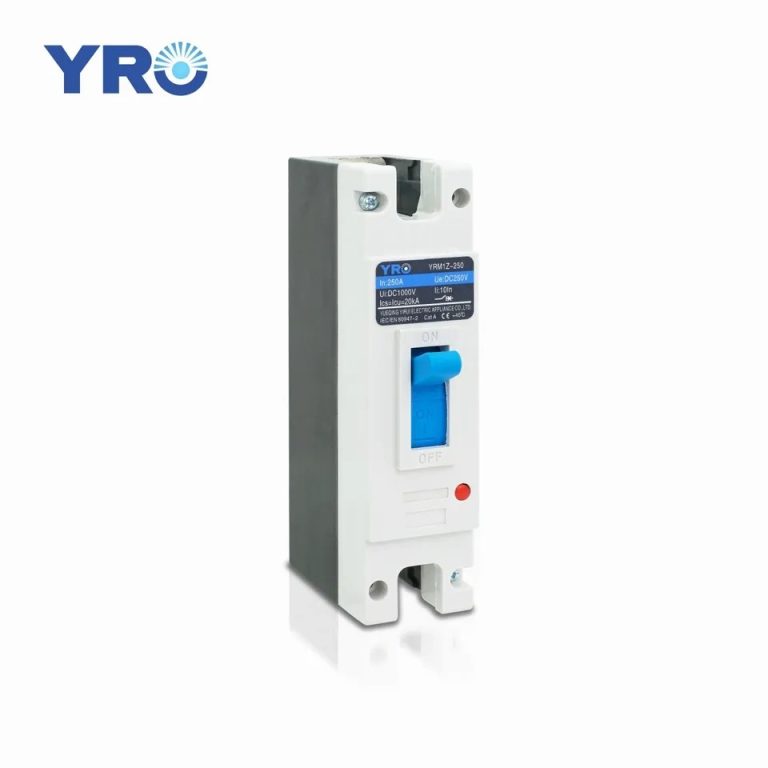
Choosing the right circuit protection across the array also reduces fault risk and long-term O&M. Treat rapid shutdown as risk insurance that also unlocks faster project close-out, not just a line item.
Implementation and Compliance Checklist
Before you submit drawings, run this checklist:
- Confirm the adopted NEC edition with your AHJ, do not assume 2023 everywhere.
- Decide module-level vs string-level based on roof type and local rules.
- Verify UL 1741 listing and IP rating for the environment.
- Document the fire-alarm or emergency trigger interface.
- Plan commissioning and monitoring so compliance is provable post-install.
Following this avoids the most common causes of rework and failed inspections.
Frequently Asked Questions
Q1. Does rapid shutdown technology work with battery energy storage systems (BESS)?
Yes. Modern rapid shutdown is designed to coordinate with hybrid inverters and battery systems. When the emergency stop or module-level signal is triggered, both the PV strings and the storage DC-coupling points should de-energize to a safe voltage. When you specify a solution, confirm it is tested for your exact inverter plus BESS combination, and that the shutdown sequence covers the battery disconnect, not just the array.
Q2. What is the difference between module-level and string-level rapid shutdown, and which should you specify?
String-level rapid shutdown isolates the entire string at the combiner box, while module-level (MLPE) brings every panel to a safe voltage individually. Module-level gives firefighters the highest safety margin and is required in the strictest jurisdictions, but it carries a higher per-watt cost. For most commercial rooftops in 2026, module-level is the safer default; string-level remains a cost-effective choice for ground-mount and lower-risk layouts.
Q3. How much does adding rapid shutdown add to a commercial solar project’s balance-of-system cost?
As a practical rule of thumb, rapid shutdown typically adds a low single-digit percentage to total BOS cost, often recovered through faster AHJ approvals, lower insurance premiums, and reduced liability. Module-level solutions cost more per watt than string-level, so the gap widens on large rooftops. Request a project-specific quote so you can model it against your financing and O&M assumptions.
Q4. Which U.S. states and jurisdictions require rapid shutdown beyond the NEC baseline?
The NEC (2023 edition, Article 690.12) is the baseline, but adoption and enforcement vary by state and even by AHJ. Some states have fully adopted NEC 2023, others remain on 2020 or 2017, and a few municipalities add stricter rooftop energy limits. Always verify the adopted code edition with your local AHJ before finalizing designs, do not assume the federal baseline applies everywhere.
Q5. Can rapid shutdown be retrofitted to an existing solar array, or is it only for new builds?
It can often be retrofitted. String-level add-ons at the combiner are relatively straightforward on many existing systems, while module-level retrofits require device installation at each panel and are more labor-intensive. Feasibility depends on your racking, wiring, and inverter. A site assessment will tell you whether a full MLPE retrofit or a targeted string-level upgrade is the better investment.
Q6. Does rapid shutdown affect system performance or energy yield?
When properly specified and installed, rapid shutdown has negligible impact on daily energy yield. Module-level optimizers can even improve harvest on partially shaded arrays. The main trade-off is upfront cost and a small increase in monitoring and commissioning work, not a meaningful loss of generation.
Q7. How do rapid shutdown systems integrate with a building’s fire alarm or emergency response plan?
Many 2026-ready solutions support a supervised emergency signal, often a dry-contact or gateway link, so a building’s fire system or a manual external switch can trigger array de-energization. For B2B sites, document this interface in the site’s emergency response plan and confirm compatibility with your fire-alarm panel during design.
Related Resources
- Why Rapid Shutdown Devices Are Essential for Commercial Rooftop Solar Projects — deep dive on rooftop deployment and code drivers.
- MCB vs. MCCB vs. ACB: Which Circuit Breaker Should You Choose for a Solar PV Project? — choosing the right circuit protection across the array.
Talk to YRO’s B2B engineering team
Our specialists will help you specify a compliant, cost-effective rapid shutdown architecture for your next commercial or utility project.
Written by the YRO Engineering & Product Team. YRO designs and manufactures UL-listed rapid shutdown and PV protection equipment for global B2B solar markets.