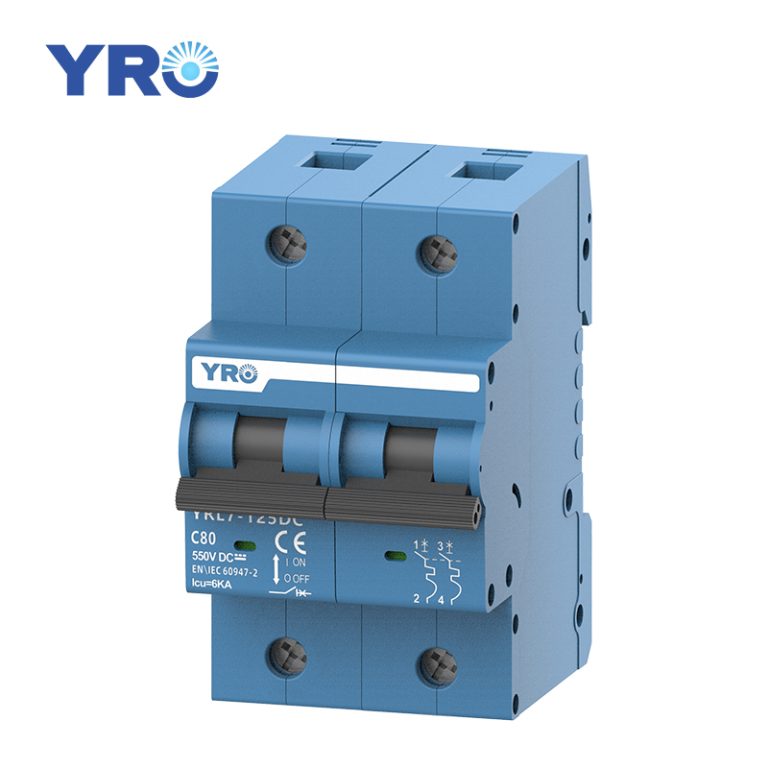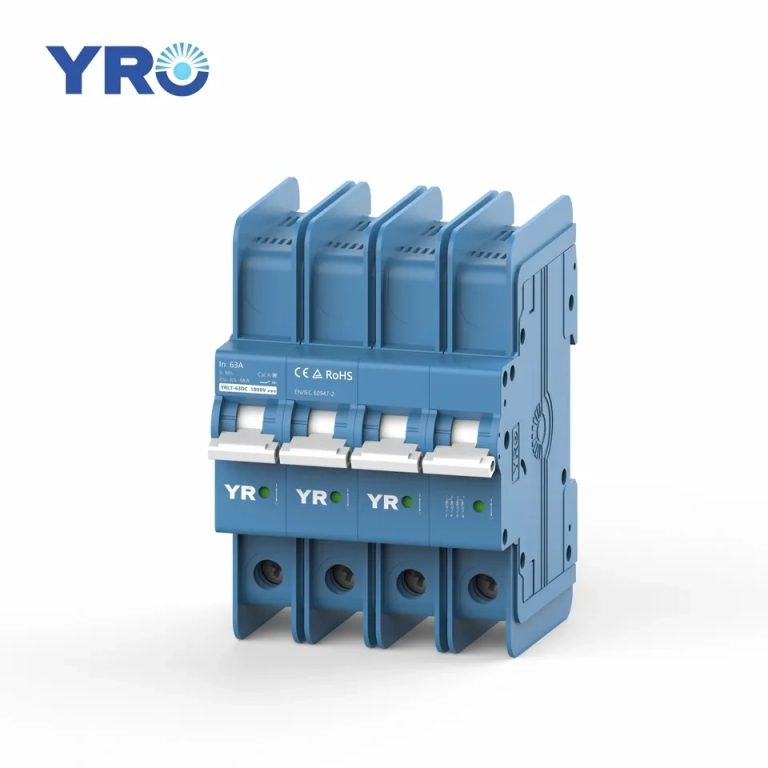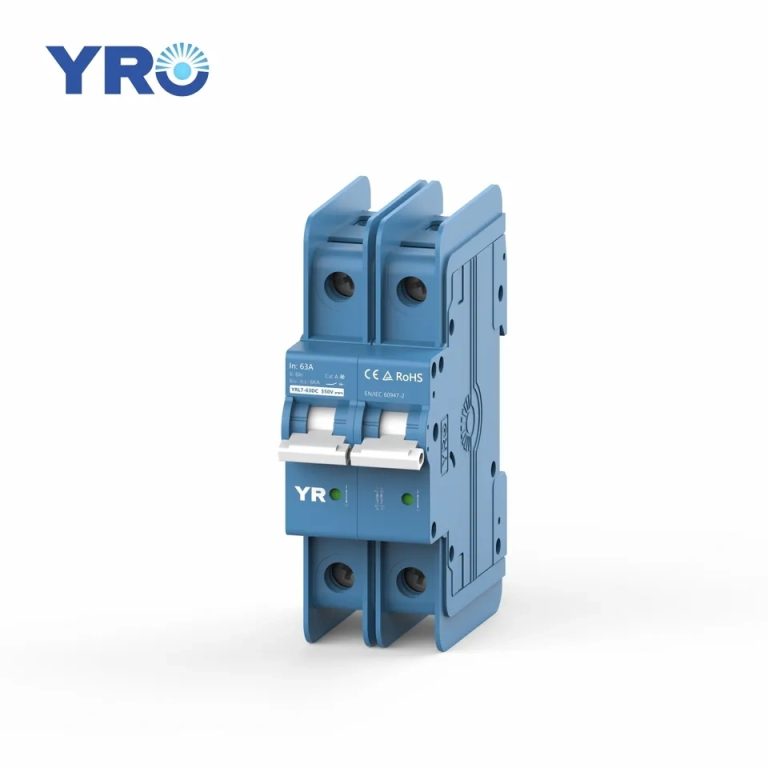






Le disjoncteur tripped shortly after the inverter was started. On the surface, the inverter seemed to be operating normally, but the circuit breaker kept cutting off the circuit repeatedly.
We all know that the circuit breaker tripping is a protective action, not a fault. It is reminding you: Hey, there’s a problem here, handle it quickly. It is alerting us that there are potential issues in the system. Instead of rushing to replace the circuit breaker, it is better to find out the real cause that triggers the protection action.
Abnormal Grid Voltage Indirectly Affects the Breaker
Grid-tied solar inverters continuously monitor the grid’s voltage and frequency.
When grid parameters fall outside the specified range, the inverter usually stops running automatically to protect equipment safety. For example:
- Grid voltage too high
- Grid voltage fluctuating significantly
- Grid frequency abnormal
These issues can cause the PV inverter to start and stop frequently, thereby exposing other hidden problems in the system.
In addition, in grid-tied PV systems, a phenomenon called “voltage rise” can occur. When the inverter delivers current to the grid, the current passing through the line impedance creates an additional voltage change, so the voltage at the inverter’s connection point is typically slightly higher than the grid-side voltage.
For example, in a 230V system, many grid-tie standards require the inverter to stop output when the voltage exceeds approximately 253V. This value comes from the allowable +10% voltage deviation range for a 230V nominal voltage, which is:
230V * 1.10 = 253V
When the inverter detects voltage exceeding this upper limit, it usually activates its protection mechanism and stops sending power to the grid.
If the local grid voltage itself is already close to the allowable upper limit, then the voltage rise caused by solar generation can cause the inverter to detect overvoltage and trigger a protective shutdown. This situation is more likely to occur in areas with high PV installation capacity or long line runs.
If the inverter frequently reports overvoltage faults or starts and stops often, it is recommended to check the voltage at the point of connection, line length, and wire specifications to see if they meet requirements.
Low Fault Current Mismatch
Typical low-voltage circuit breakers usually rely on a higher fault current to trigger instantaneous magnetic tripping. However, the current output capacity of grid-connected solar inverters is limited by power electronic devices, and their short-circuit current usually does not reach the level of traditional grids.
During faults or overloads, the inverter generally limits the output current through control strategies and enters a protection state or reduces output within a short period of time.
This characteristic may lead to a difference: Disjoncteurs are designed to rely on a higher fault current to achieve rapid instantaneous tripping, while the current amplitude provided by the inverter system is relatively limited and lasts for a shorter time.
In some edge conditions, such as long lines, high impedance, or multiple inverters operating in parallel, the system may be more prone to persistent overload rather than typical short-circuit current characteristics, thus making the circuit breaker more dependent on the thermal tripping mechanism.
Excessive Output Power Triggers Overcurrent Protection
The solar inverter converts DC power from solar panels into AC power for loads or for delivery to the grid. When sunlight is strong, the inverter’s output power increases.
If the connected line’s design capacity is insufficient to handle the inverter’s maximum output current, the current may exceed the electrical breaker’s rating. When this happens, the thermal protection mechanism inside the breaker activates and cuts off the circuit.
This phenomenon typically occurs during peak generation hours around noon.
Therefore, installers usually need to confirm whether the inverter’s maximum output current falls within the allowable range of the line and the breaker. If the system’s design capacity is insufficient, the breaker may trip repeatedly.
Internal Inverter Fault
The inverter is essentially a complex power electronic device, which contains:
- Power semiconductor devices
- Capacitors
- Control board
- Current and voltage sensors
- Various protection circuits
Any damage to a key component can cause abnormal current, thereby triggering the circuit breaker to act.
Common faults include:
- Failure of power transistors
- Failure of capacitors
- Internal short circuit
- Abnormal control system
Most current inverters have a fault code display function. If there are frequent tripping, the inverter log records can be checked to determine whether the problem lies with the inverter itself or the external lines.

Conclusion
Circuit breaker tripping caused by a solar inverter is usually not due to a single reason. Common causes include voltage abnormalities, leakage current, overcurrent, and internal inverter faults.
In most cases, the electrical disjoncteur is not the source of the fault; rather, it actively cuts off the circuit after detecting an abnormality, protecting equipment and personal safety.
For PV systems, properly selecting and correctly installing low voltage disjoncteurs remains a very important safety measure. It not only protects the inverter and other electrical equipment, but also reduces the risk of electrical fires and equipment damage, improving the long-term reliability of the entire solar system.