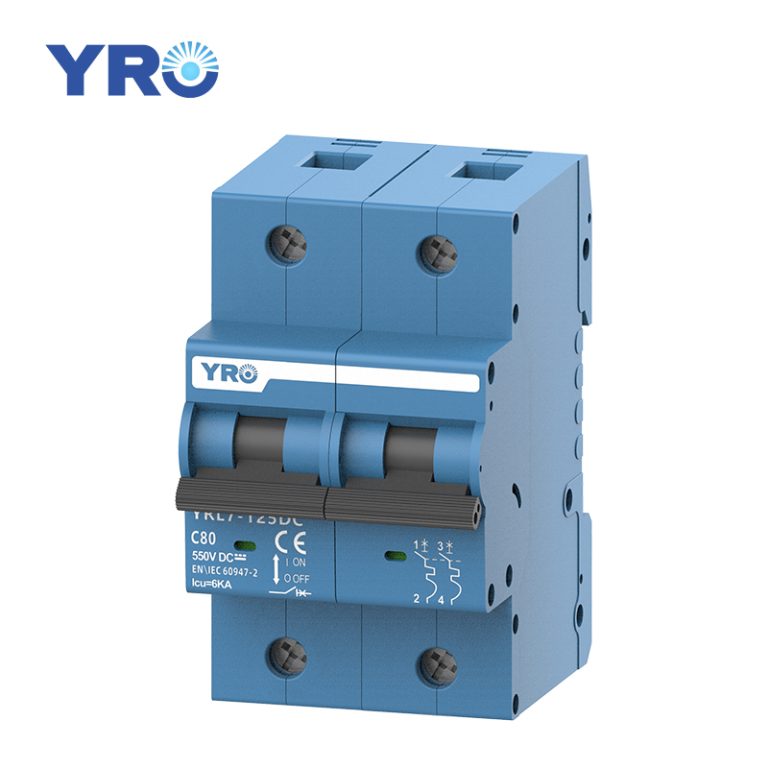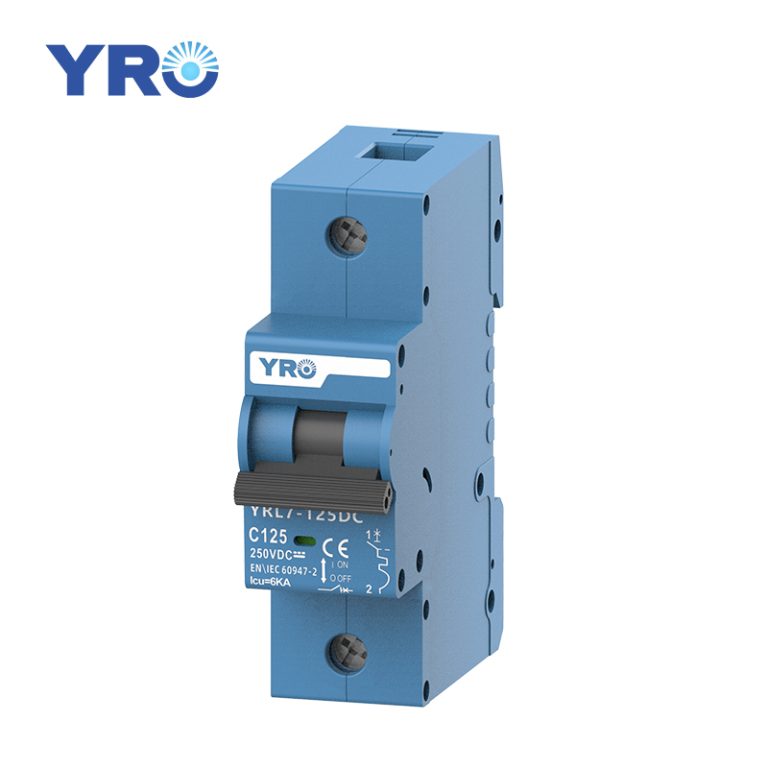







PV installers encounter disjuntores in various solar projects. However, knowing how to install a circuit breaker is by no means just learning how to turn it on or off.
Installers need to be able to identify different types of circuit breakers, read product markings, understand polarity requirements, identify circuit types, and check wiring before the system is energized.
Mastering this basic knowledge helps installers reduce common errors during photovoltaic installation and maintenance.
1. Know Where Circuit Breakers Are Installed
A PV system contains multiple devices, such as combiner boxes, inverters, battery packs, solar optimizers, and so on.
Circuits at different locations use different types of protection devices. Installers first need to confirm which circuit a circuit breaker belongs to based on the installation drawings and equipment markings.
2. Be Able to Distinguish AC Circuit Breakers from DC Circuit Breakers
Both DC circuits and AC circuits exist in a photovoltaic system.
The part between photovoltaic modules and the inverter belongs to the DC circuit. The AC side of the inverter belongs to the AC circuit.
AC circuit breakers and DC circuit breakers have different operating conditions. Installers need to check the AC/DC marking on the product, as well as the product instructions and installation documents.
3. Learn to Read the Basic Markings on a Circuit Breaker
Installers do not necessarily have to select circuit breakers, but installers must be able to read the basic information on a circuit breaker.
Common information includes:
- Product model
- AC or DC marking
- Corrente classificada
- Tensão nominal
- ON / OFF marking
- Positive and negative pole markings
4. Be Able to Distinguish the Positive Pole from the Negative Pole
Positive and negative poles are basic knowledge in photovoltaic installation.
Installers need to confirm polarity based on the + e − markings on the equipment, the wiring diagram, and the product instructions.
It should be noted that the + e - on a circuit breaker indicate current direction, not positive and negative poles. Brands such as Schneider and ABB also use the same marking method.

5. Know That “Tripping” Means an Abnormality
Installers do not need to determine the specific cause of tripping by themselves, but when a circuit breaker trips repeatedly, they must not solve the problem by repeatedly closing it.
Installers should check the site conditions and hand the circuit problem over to an electrician, engineer, or technician for further confirmation.
6. After Wiring Is Completed, Do Not Only Look at the Circuit Breaker Handle
The circuit breaker handle being in the ON position does not prove that the entire circuit wiring is definitely correct.
Installers also need to check:
- Whether the positive and negative poles have been confirmed
- Whether the wiring has been completed according to the product markings
- Whether the wiring terminals have been handled according to installation requirements
- Whether the on-site wiring is consistent with the drawings
7. When These Situations Occur, Do Not Continue to Operate Based on Experience
Some problems at the installation site cannot be solved by experience.
Por exemplo:
- The positive and negative poles cannot be confirmed
- The wiring direction cannot be confirmed
- The product markings are inconsistent with the drawings
- The on-site equipment is inconsistent with the installation documents
- The circuit breaker trips repeatedly
- A conflict is found between the product instructions and the on-site installation method
When encountering these situations, installers should stop the relevant operation and confirm with the responsible electrician, engineer, or manufacturer’s technician.
Key Points That Photovoltaic Installers Need to Master
Solar installers do not need to turn themselves into electrical designers.
Installers first need to achieve the following points:
First, be able to recognize.
Installers need to distinguish AC circuit breakers from DC circuit breakers and recognize the basic markings on products.
Second, be able to understand.
Installers need to understand basic information such as model, number of poles, ON/OFF, and positive and negative poles.
Third, connect correctly.
Installers need to wire according to product markings, wiring diagrams, and installation documents.
Fourth, be able to judge abnormalities.
Installers need to know that tripping is not a normal working state, and the problem cannot be solved by repeatedly closing the breaker.
Fifth, know when to stop.
When the model, polarity, wiring direction, or on-site conditions cannot be confirmed, installers should stop operating and seek technical support.
For PV installers, the focus of circuit breaker knowledge is not to complete the design of the entire protection system by themselves, but to correctly identify equipment, correctly understand markings, correctly complete installation, and know when to stop operating when abnormalities occur.