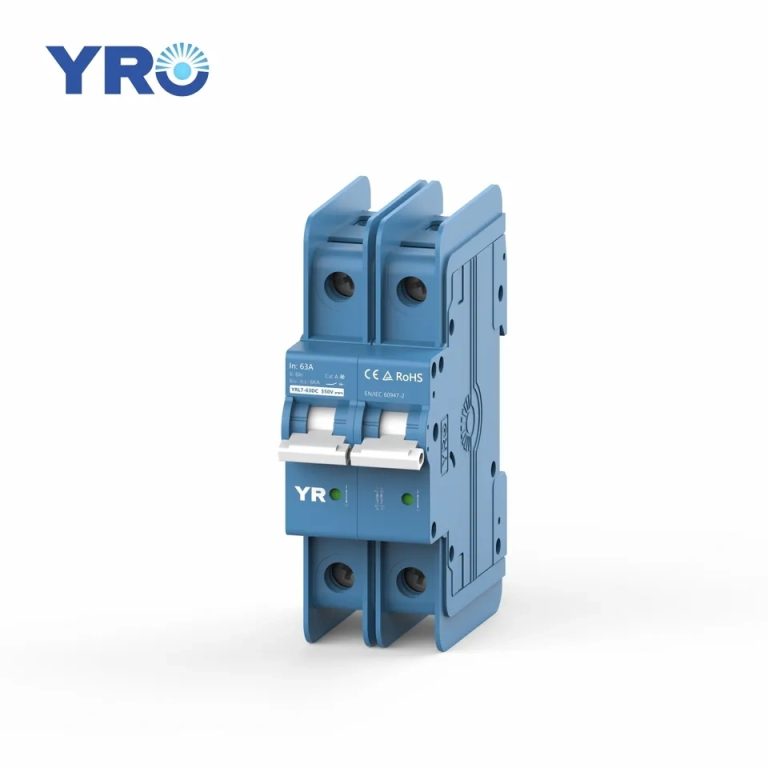







The global renewable energy industry is continuing to develop. Solar PV and wind power are adding new generation capacity, and energy storage is also becoming an important part of some power systems.
The development of renewable energy also brings more electrical circuits that need protection, isolation, and control. Circuit breakers are one of these devices.
IEA reports show that global renewable power generation capacity increased by 800 GW in 2025. Solar PV accounted for more than three-quarters of the renewable capacity added that year. The IEA also projects that global renewable power generation capacity will increase by about 4,600 GW between 2025 and 2030, with solar PV expected to account for nearly 80% of the new capacity.
These figures do not directly represent the proportional increase in disjuntor demand. But they do indicate that more renewable power generation systems will be built in the future, and these systems require supporting electrical distribution and protection equipment.
Why Do Renewable Energy Projects Create Demand for Circuit Breakers?
Renewable energy systems are not just generation equipment.
Take a solar PV system as an example. It typically includes PV modules, DC circuits, power conversion equipment, AC circuits, and distribution devices. The specific configuration depends on the system design.
Each electrical section operates under different conditions. Therefore, designers need to select appropriate protection and switching equipment based on the electrical characteristics of each circuit.
Disjuntores provide circuit protection against faults such as overloads and short circuits. As the scale of renewable energy installations expands, the number of DC-side circuits, AC-side circuits, and distribution circuits within the systems increases simultaneously. The application scenarios for circuit protection devices such as circuit breakers also expand accordingly.
1. PV Projects Increase Demand for DC Circuit Breakers
PV modules are first connected in series to form strings. Multiple strings are combined into combiner equipment. The DC output then feeds into inverters or other power conversion equipment.
DC MCBs and DC MCCBs can be used for protection in different DC circuits based on different rated voltages, currents, and circuit conditions.
As PV projects continue to grow, the market demand for DC circuit breakers with different voltage and current ratings is also increasing. This type of DC protection is not only used in large-scale PV power stations. Commercial rooftops, industrial buildings, agricultural facilities, and other PV systems also have corresponding protection needs.

2. Large-Scale PV Projects Increase Protection Points
Small rooftop PV systems typically have simpler distribution structures. Large PV systems contain a large number of strings, combiner equipment, inverters, distribution boxes, and other electrical equipment. The more circuits there are, the more locations where protection points need to be installed.
PV modules are first connected in series to form strings. Multiple strings are connected to the same circuit, and the current superimposes accordingly. DC power passes through combiner equipment and enters the inverter. The inverter then converts it to AC power for the downstream distribution. The operating current on the string side is primarily determined by the module parameters. The circuits after combining carry larger currents. Large systems typically use 1000V or 1500V system voltage on the DC side.
The voltage and current conditions at each level are different, so circuit breaker specifications also differ. String branch circuits can use miniature circuit breakers with lower rated currents. Combiner outputs and distribution main lines require molded-case circuit breakers with higher rated currents.
The expansion of PV scale brings not only an increase in the total number of circuit breakers but also a parallel demand for multiple circuit breaker specifications.
3. Energy Storage Adds DC Protection Applications
Energy storage is another area that is increasing the number of electrical installations.
An energy storage system typically includes battery units, power conversion equipment, DC distribution equipment, and AC distribution equipment.
O disjuntores e disconnect switches used on the DC side must be selected based on the system’s DC voltage and current. Some energy storage systems use circuit breakers for protection. Others use fusíveis or disconnect switches. Some systems may use a combination of these devices.
The more energy storage projects there are and the larger their scale, the more DC protection products are required.
4. Inverters and Distribution Systems Increase Demand for AC-Side Circuit Breakers
Renewable energy systems contain not only DC circuits but also AC circuits.
Take a PV system as an example. PV modules produce DC power. The inverter converts DC power to AC power, which then connects to the building’s distribution system or the grid.
The AC side typically includes distribution cabinets, feeder circuits, and other AC equipment. These circuits need appropriate protection devices based on the system design.
The development of renewable energy increases protection requirements on both the DC side and the AC side.
Why Might Circuit Breaker Demand Continue to Grow?
The development of renewable energy cannot be used to directly calculate a specific proportion of growth in circuit breaker demand. However, the two are indeed directly related at the electrical system level.
The more PV and wind capacity is installed, the more generation equipment, electrical connections, and distribution systems are required. And these systems necessarily contain a large number of electrical circuits. Each circuit needs appropriate protection devices.
Currently, solar PV is the primary driver of global renewable capacity additions. The application scope of energy storage is also continuing to expand.
Both together are increasing the application scenarios for electrical protection devices. Circuit breakers are one of these devices.
Conclusão
The development of the renewable energy industry is increasing the number of electrical systems worldwide.
PV projects are adding applications for DC and AC circuit protection. Energy storage projects are adding more DC and AC electrical circuits. Large-scale renewable projects also contain more distribution nodes and protection needs.
As solar PV, wind power, and energy storage continue to grow, the number of electrical circuits in renewable energy systems will also increase. These circuits will continue to generate demand for circuit breakers and other electrical protection devices.