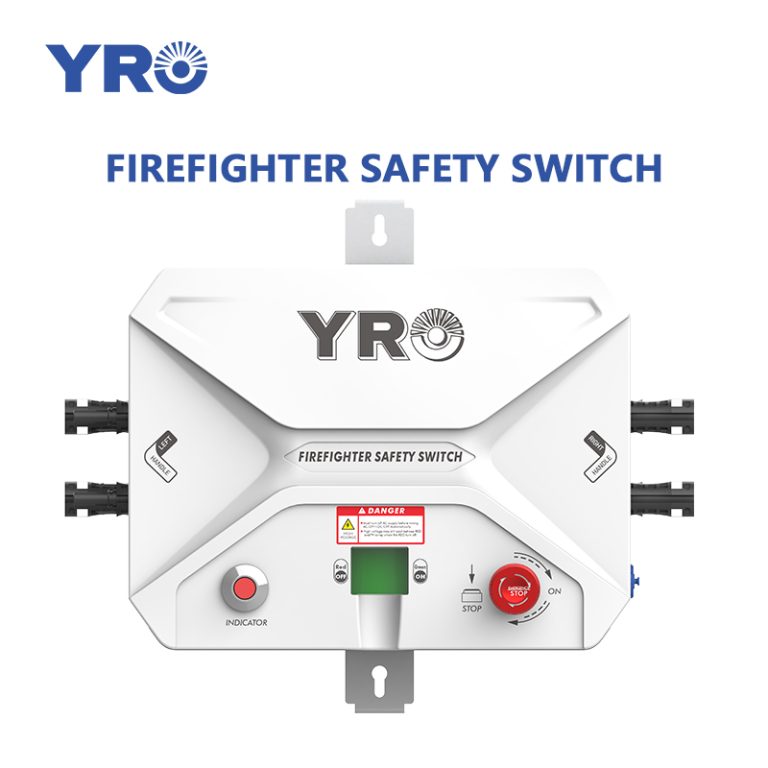
When you spec or maintain a PV system, rapid shutdown usually enters the conversation as a rooftop formality. That framing hides real risk. The truth is that rapid shutdown requirements, voltage limits, and device choices shift with array type, conductor routing, and the code edition your jurisdiction enforces. In this guide we walk through five rapid shutdown myths that quietly trip up installers, EPCs, and procurement teams, then replace each one with the detail you need to keep a design inspection-ready and safe for first responders.

Myth 1 — Rapid Shutdown Devices Are Only for Rooftop Solar
You have probably heard rapid shutdown described as a rooftop rule. It is an easy shortcut, and for years most enforcement did center on building-mounted arrays. But the requirement is written around where conductors go and who might contact them, not the racking type. A thiết bị tắt máy nhanh earns its place on ground-mounts, carports, and agrivoltaic arrays whenever DC conductors approach a building or a first responder can reach the array. Treat “rooftop only” as a habit, not a code text. Ground-mounted solar rapid shutdown is a live question on almost every utility and commercial project that sits beside a structure.
Myth 2 — Every Solar PV System Has the Same Rapid Shutdown Requirements
Your neighbor’s rooftop rule is not your ground-mount rule. Requirements track the adopted code edition (2020 versus 2023 NEC), the array boundary, and whether conductors enter a building. A string-level rapid shutdown layout that satisfies one jurisdiction can fall short in another if the local amendment or AHJ interpretation differs. The safe move is to design to the specific rapid shutdown requirements your authority enforces and to document them in the permit package, rather than copying a template from a different site and assuming it carries over.
Myth 3 — Rapid Shutdown Means Solar Panels Produce No Voltage
This is the dangerous one. Rapid shutdown does not make modules stop producing; it brings the controlled conductors down to safe levels after initiation, within defined time and zones. Under NEC 690.12, conductors inside the array boundary must drop to 80 V or less within 30 seconds, and those inside a building to 30 V or less. The modules still generate whenever the sun is on them.
What the voltage limits mean for you
You still handle exposed conductors as live, which is exactly why initiation points and 690.56 labeling matter. The table below is a planning reference, not a substitute for your AHJ’s ruling on rapid shutdown voltage requirements.
| Zone | Voltage after initiation | What it means for your design |
|---|---|---|
| Inside a building | ≤ 30 V | Any DC conductor entering a building must comply |
| Within array boundary (1 ft) | ≤ 80 V within 30 s | Modules and conductors in the boundary are controlled |
| Beyond array boundary | Outside 690.12 limits | Open-ground conductors are generally exempt |
Unsure which rapid shutdown voltage limits apply to your array?
Talk to the YRO technical team about a 690.12-ready layout before your permit package goes in: explore YRO rapid shutdown devices.
Myth 4 — All Rapid Shutdown Devices Work the Same Way
They do not. Module-level and string-level architectures behave differently, list under different standards, and fit different layouts. A module-level rapid shutdown switch controls voltage at each panel, while a string-level unit controls groups of modules at the combiner. Rapid shutdown device compatibility with your inverter, optimizer, and monitoring also varies by manufacturer. Picking on price alone can leave you with a device that will not commission cleanly with your existing balance of system, which is a problem you only discover during inspection.

Myth 5 — A Rapid Shutdown Device Replaces Other Solar Safety Equipment
A rapid shutdown function is one layer, not the whole safety stack. It does not remove the need for a listed DC disconnect, overcurrent protection, grounding, or arc-fault protection where required. When you compare rapid shutdown vs. DC disconnect, remember they serve different moments: the disconnect isolates for service, while rapid shutdown protects responders during an emergency. In practice many teams pair an RSD with Hộp kết hợp PV that already integrate disconnect and surge protection, which trims enclosure count without dropping a required function. Read rapid shutdown as an addition to your solar rapid shutdown system design, never a substitution for the equipment the code still calls out.
Building a complete PV safety package?
Pair YRO rapid shutdown with combiner boxes that integrate disconnect and surge protection, and get a layout-based quote instead of a per-watt guess: see YRO PV combiner boxes.
Rapid Shutdown Myths vs. Reality
Use this recap as a quick reference when a stakeholder repeats one of the five assumptions above.
| Myth | Reality |
|---|---|
| Only for rooftop solar | Applies wherever conductors reach a building or responders can reach the array |
| One rule fits every system | Tracks code edition, array boundary, and AHJ interpretation |
| Panels go dead after shutdown | Voltage drops to safe limits in controlled zones; the sun still generates |
| All devices work the same | MLPE and string-level differ; compatibility varies by brand |
| RSD replaces safety gear | It adds to, not replaces, disconnect, grounding, and AFCI |
Frequently Asked Questions
How do you verify a rapid shutdown device after installation?
After commissioning, initiate rapid shutdown and measure conductor voltage at the defined points within 30 seconds using a calibrated meter. You should see array-boundary conductors at 80 V or less and any in-building conductors at 30 V or less. Document the readings and keep them with the inspection record.
Where should the rapid shutdown initiator switch be located?
NEC 690.56 places the initiator at a readily accessible outdoor location near the main disconnect, clearly labeled for first responders. You want it visible at the array boundary, not buried inside an enclosure they would have to open under stress.
Can rapid shutdown devices report status to plant SCADA or monitoring?
Many modern units expose initiation state and fault signals over RS485, Modbus, or a manufacturer protocol. If you need central visibility, confirm the communication option before purchase and plan the wiring run with the rest of your monitoring architecture.
What certifications should a buyer look for?
Look for UL 1741 listing in the U.S., and IEC 62109 or TÜV marks for international projects. Certifications tell you the device was tested for the fault and environmental conditions it will actually face, not just that it switches.
How does rapid shutdown differ from a standard DC disconnect?
A DC disconnect opens a single point so the system can be isolated for service, but it does not force module-level voltage down for responders during an emergency. Rapid shutdown actively brings controlled conductors to safe limits across the array, which is why the two serve different moments in a safety sequence.
Are rapid shutdown rules the same in IEC markets outside the U.S.?
No. NEC 690.12 is a U.S. code. IEC markets follow IEC 62446 and local standards that may not mandate the same shutdown behavior. If you build or supply across borders, confirm the destination market’s rule rather than assuming NEC alignment.
Can you mix rapid shutdown brands within one array?
Sometimes, but compatibility is not guaranteed. Inverter protocols, initiation signaling, and monitoring can differ between brands, so mixing risks a device that will not commission or report correctly. Keep a validated bill of materials, or ask the manufacturer to confirm interoperability before install.
What does rapid shutdown add to balance-of-system cost?
It varies with architecture. Module-level control raises device count because it sits at every panel, while string-level control groups modules and usually costs less at scale. The real number depends on layout, so a layout-based quote beats a generic per-watt estimate.
Does rapid shutdown affect anti-islanding during a grid outage?
Rapid shutdown and anti-islanding solve different problems. Anti-islanding stops a grid-tied inverter from back-feeding a dead grid; rapid shutdown lowers array conductor voltage for responder safety. A proper design keeps both functions intact without one disabling the other.
How often should rapid shutdown function be tested over a system’s life?
Beyond commissioning, revisit it during major array changes, after inverter swaps, and on a periodic O&M cadence your site policy defines. Field experience shows initiation points and labels degrade, so a documented re-test protects both compliance and crew safety.
Related Resources
- Does NEC 690.12 Apply to Ground-Mounted Solar? Rapid Shutdown Requirements Explained
- NEC 2020 vs 2023 Rapid Shutdown Requirements: What Installers Must Know
- 5 Reasons Why Every Modern PV System Needs a Rapid Shutdown Device
About this guide
Written by the YRO technical team. YRO designs and manufactures UL, IEC, and TÜV-certified rapid shutdown devices, PV combiner boxes, and MLPE for utility, commercial, and residential solar. The information here summarizes NEC 690.12 intent for planning purposes; always confirm requirements with your AHJ and the adopted code edition.
Need a compliant rapid shutdown design for your next PV project?
Contact the YRO team for a code-ready layout, certified hardware, and a quote sized to your array: explore YRO rapid shutdown solutions.
Rapid shutdown stops being a mystery once you separate habit from code text. The five myths above all share one root cause: treating a safety function as a single rooftop checkbox instead of a design decision that tracks your array type, conductor routing, and jurisdiction. When you plan around the actual 690.12 limits and pick hardware that fits your layout, you protect first responders and keep your permit on schedule. If a detail in this guide touches your current project, bring it to your YRO contact before the design freezes.