





A rapid shutdown device is the component that lets a photovoltaic array drop to a safe voltage within seconds when firefighters or service technicians need it to. When it is installed correctly, it protects lives and keeps your system inside the rules that more regions adopt every year. When it is installed incorrectly, the protection can fail silently — a problem you usually discover only during an emergency, an inspection, or a warranty claim.
This guide covers the installation mistakes we see most often in the field and the practical steps you can take to avoid each one. None of these are exotic; most come down to reading the right document, checking compatibility before you mount anything, and confirming the result instead of assuming it works. As rooftop and commercial solar keeps scaling up, and as more authorities write module-level protection into their fire-safety codes, the number of these devices going onto arrays grows every season — which makes getting the install right matter more, not less.

1. Wiring From Memory Instead of the Current Diagram
The mistake: Every rapid shutdown device ships with a wiring diagram that matches its exact model, firmware, and terminal layout. The most common error is treating last year’s unit as if it were this year’s. Terminals move, polarity markings change, and a single misplaced conductor can leave a string partially energized.
How to avoid it: Before you open the enclosure, confirm the label on the unit matches the revision of the manual you are holding. Photograph the existing wiring before you disconnect anything, then follow the diagram for your specific model step by step. If you are working with a string-level rapid shutdown unit, the terminal sequence and the initiation switch location are spelled out in that model’s documentation — do not guess.
2. Mixing Module-Level and String-Level Architectures
The mistake: A module-level unit isolates power at the panel; a string-level unit isolates at the string. Pairing devices that were never designed to coordinate leaves part of the array at hazardous voltage even after you trigger the shutdown. This is easy to do on a retrofit where older hardware is still in place, or when two suppliers were used on the same project.
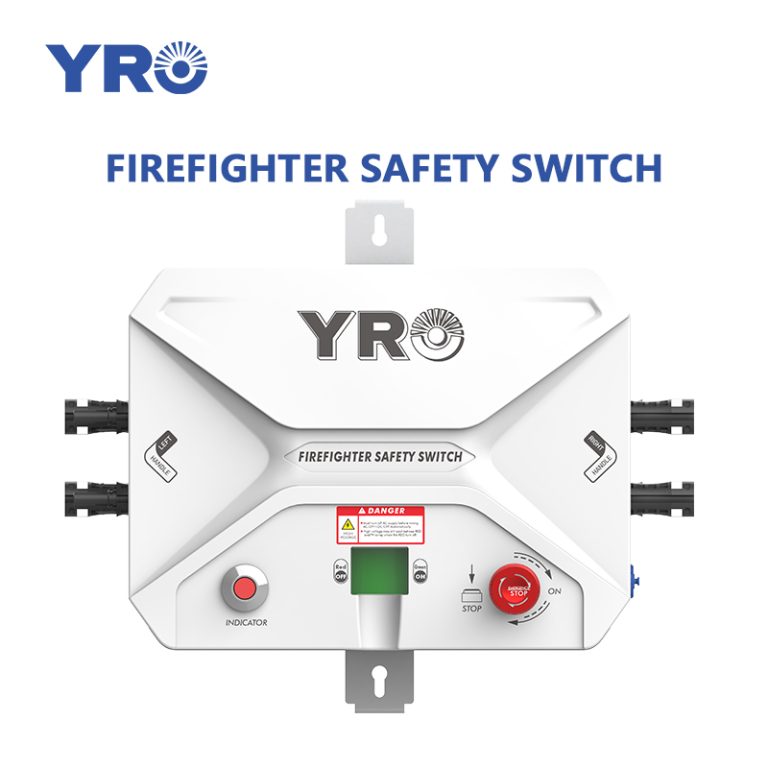
How to avoid it: Decide the architecture first, then build the bill of materials around it. If your project calls for panel-level isolation, specify a module-level firefighter safety switch rated for the same inverter family, and keep every initiating device on the same communication scheme. Mixing brands at the communication layer is the fastest way to create a shutdown that only half-works.
3. Weak or Missing Grounding
The mistake: Grounding is where quiet failures live. A loose equipment-grounding conductor, a painted mounting surface that breaks the bond, or a skipped ground on the enclosure turns a safety device into a shock hazard and can let a surge find the electronics instead of the earth.
How to avoid it: Verify the ground path with a meter before you energize the system, not after. Use a verified continuity path from the device enclosure to the system ground, and keep the bonding surface clean and bare. On exposed rooftops, pair the device with a properly specified DC surge protector and a short, direct ground conductor so transient energy has a clear route away from the array.
4. Ignoring Inverter and Voltage Compatibility
The mistake: Your rapid shutdown device has a rated operating voltage and current. Exceed either one and the unit can fail under load, often with no warning until a fault occurs. Compatibility is not only about the panel string — the inverter’s open-circuit voltage and the number of strings per input matter just as much. As higher-density panels and storage enter more installations, the margins that used to be comfortable are getting tighter.
How to avoid it: Pull the inverter datasheet and the array layout before you order. Confirm the device rating covers the worst-case open-circuit voltage on the coldest day, not the nameplate average. Where several strings land in one location, plan the enclosure and the Hộp kết hợp PV so each input stays within its rated limit and you are not cramming conductors into an undersized housing.
| What to verify | Where to confirm | Why it matters |
|---|---|---|
| Rated voltage vs coldest-day Voc | Inverter and panel datasheet | Prevents load failure |
| Initiation scheme | Device manual | Ensures full shutdown |
| Enclosure IP rating | Install location | Outdoor reliability |
| Ground path continuity | Meter test | Removes shock hazard |
5. Poor Enclosure, Mounting, and Heat Management
The mistake: These devices live outdoors, often on a roof or a sunny wall. An enclosure with the wrong ingress rating, or a mount that traps heat against a dark surface, shortens service life and can trip the very protection you installed. The shift toward denser rooftop layouts leaves less room for sensible spacing.
How to avoid it: Match the enclosure IP rating to the location — rooftop and exposed walls need the higher rating, not the indoor one. Leave air space behind the unit, keep it out of direct thermal soak where you can, and secure the mounting so vibration from wind does not loosen terminations over time. A few centimeters of spacing and the right gasket do more for reliability than most people expect.
6. Skipping Labeling, Commissioning, and Troubleshooting
The mistake: A perfect wiring job still fails an inspection if the disconnect location is not labeled, or if you never confirm the device actually drops voltage. “It should work” is not a commissioning record, and a missing label is the first thing an inspector writes up.
How to avoid it: Label the rapid shutdown initiation point at every required location, then run a real test: initiate shutdown and measure the conductor voltage on both sides to confirm it falls within the required safe threshold. Keep a short commissioning note per array. When something does not behave, work the protection and overcurrent path in order — power, communication, then the initiation switch — instead of swapping parts blindly.
Get a Rapid Shutdown Device That Installs Cleanly
Choosing hardware that is documented, certified, and built for your array is the easiest way to avoid most of these mistakes before the first conduit is cut. YRO manufactures rapid shutdown devices, combiner boxes, and PV protection components to UL1741, TUV, and ISO 9001 standards, with application drawings for every model and an in-house test laboratory.
Frequently Asked Questions
Does NEC 690.12 require a rapid shutdown device on every solar array?
In the United States, NEC 690.12 sets the rule for photovoltaic rapid shutdown. For most rooftop and building-mounted arrays, the conductors must be brought below a defined safe voltage within a set time after initiation. Ground-mounted systems and certain array configurations follow different boundaries, so the right answer depends on how and where the array is mounted. The practical move is to check the adopted code edition in your jurisdiction and design to that, rather than to a generic rule.
What is the difference between module-level and string-level rapid shutdown?
Module-level rapid shutdown isolates voltage at each panel, so a single module or a small group drops to a safe level. String-level rapid shutdown isolates at the string, bringing the whole string down but typically closer to the combiner. Module-level gives finer protection and is often required where panels are near occupied roof spaces; string-level is simpler to lay out on larger ground or carport arrays. Your choice drives the rest of the bill of materials.
How do you test a rapid shutdown device after installation?
After wiring, initiate shutdown from the designated switch and measure the conductor voltage on both sides of the device with a calibrated meter. Confirm it falls within the safe threshold set by the applicable code, then repeat at each required initiation point. Record the readings per array as your commissioning note. If voltage does not drop, work the path in order: supply power, communication between units, then the initiation switch itself.
Can rapid shutdown devices from different brands be mixed on one system?
Only when the manufacturer documents that the units share the same initiation and communication scheme. Mixing brands at the communication layer is a common cause of a shutdown that only partially works, because one brand’s initiation signal may not be understood by the other. If a mixed system is unavoidable, get written confirmation of interoperability before installation rather than discovering it during commissioning.
Do rapid shutdown devices reduce solar system efficiency or yield?
A correctly specified device has a negligible effect on daily yield. The losses come from insertion resistance and any buffering electronics, and for compliant hardware they are small relative to the safety gain. Efficiency problems usually trace back to an undersized or mismatched unit, not to the concept of rapid shutdown itself. Specifying to the array’s actual voltage and current keeps the impact minimal.
Are rapid shutdown requirements the same outside the United States?
No. While the NEC 690.12 model is widely referenced, the European Union and individual countries apply their own rules, often built around module-level protection and national fire-safety standards rather than a single uniform threshold. If you install across markets, treat each jurisdiction’s requirement as its own design input. For projects in Europe, confirm the local standard and select hardware that carries the relevant certification.
How long does a typical rapid shutdown device installation take?
For a straightforward rooftop array with documented hardware, the device itself adds a modest amount of time to the wiring and commissioning steps — often well under a day for a single residential system, more for large commercial layouts with many initiation points. Most of the clock goes to correct wiring, labeling, and the shutdown test, not to mounting the unit. Rushing those steps is what creates the mistakes above.
Related Resources
Keep building your installation playbook with these related guides from the YRO technical team:
- How to Reduce Circuit Breaker Procurement Costs Without Buying Cheap Products?
- What Circuit Breaker Knowledge Do Solar Installers Need to Know?
- How EV Charging Is Changing Circuit Breaker Requirements
- What Is a UL 1077 DC MCB? Standards, Tests, and Applications
About the author: This article was prepared by YRO’s technical team. ZHEJIANG YRO NEW ENERGY CO., LTD. has manufactured photovoltaic protection components since 2011 and supplies more than 110 countries. Products are built to UL1741, TUV, CB, UKCA, KEMA, and ISO 9001 standards, with an in-house test laboratory and OEM/ODM support.