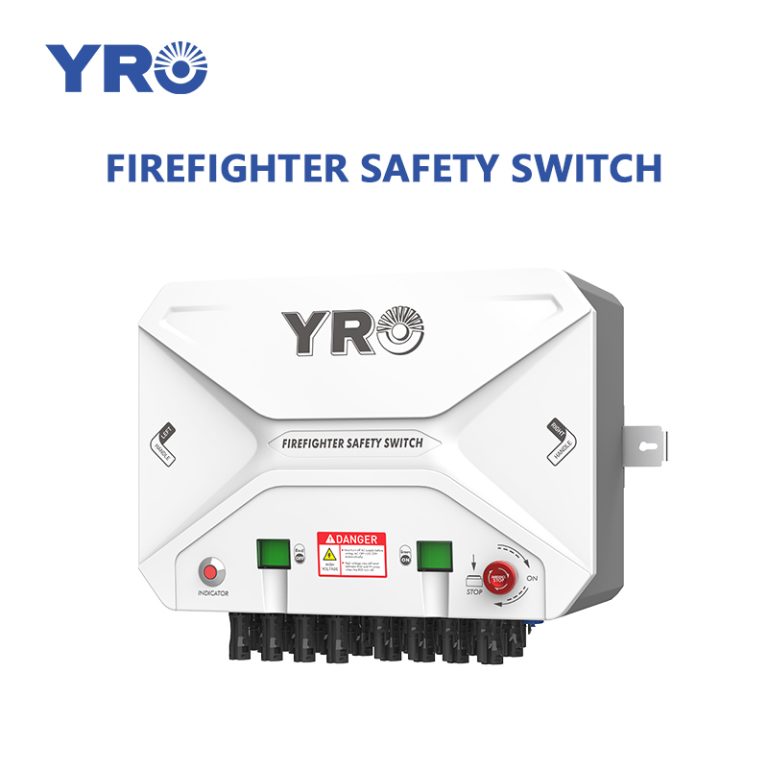
When you specify, install, or procure a photovoltaic system, rapid shutdown is no longer optional in most developed markets. It is a code requirement that directly affects firefighter safety, permitting speed, and your commercial liability. If you sell, distribute, or deploy PV components across borders, you need a clear, practical view of how the rules differ between the United States, Germany, Australia, and Canada. This guide compares the core standards, the clauses that matter to you, and the exact questions to answer before you buy. YRO, a manufacturer of certified rapid shutdown devices, built this reference from front-line compliance work with global installers and EPCs.
Rapid shutdown (RSD) is a function that quickly reduces the DC voltage in a PV array to a safe level when activated, typically by firefighters or emergency responders, so a roof or building facade is not a live electrical hazard during an incident. The exact voltage limits, trigger methods, and applicability vary by country, which is why a single global specification rarely works.
The Four-Market Rapid Shutdown Comparison
Use the table below as your at-a-glance reference. Treat it as a planning framework, not a final compliance conclusion: every market adopts code editions on its own schedule, and local authorities (AHJs) can add requirements. Always confirm the current adopted version with the sources listed in each country section.
| Comparison dimension | United States | Germany | Australia | Canada |
|---|---|---|---|---|
| Primary reference | NEC Article 690.12, plus the edition adopted by your state or local AHJ (2017 / 2020 / 2023). | VDE-AR-E 2100-712, national building & firefighter (Feuerwehr) rules, with TÜV conformity. | AS/NZS 5033 + AS 4777, plus state/territory rules and Clean Energy Council guidance. | Canadian Electrical Code (CSA C22.1), Section 64, in the province’s adopted edition. |
| Specific RSD function required? | Yes. Controlled conductors must drop to ≤30 V and ≤240 VA within 1 ft (0.3 m) and ≤80 V within 10 ft (3.0 m) of the array boundary within 30 seconds. | Yes. A firefighter switch / emergency de-energization is required so responders can safely isolate the PV system. | DC isolation is mandated; some states require module-level shutdown. Verify with your local regulator. | Yes. CEC rapid-shutdown rules for dwelling/rooftop PV mirror NEC intent; adopted per province. |
| Equipment certification | UL 1741 inverters, listed modules (UL 1703), and a listed RSD. | TÜV, VDE, CE marking, and EN 50618 conductor compliance. | CE, IEC 61730 / IEC 62446, and CEC-approved inverter listing. | CSA, cUL, or ULc certification to CSA C22.2. |
| Confirm before you procure | Adopted NEC edition, rooftop/building type, module- vs array-level, UL listing. | VDE-AR-E version, building & fire-authority rules, TÜV mark. | Equipment configuration, AS/NZS 5033 compliance, state rules, CEC approval. | Adopted CEC edition (province), CSA/cUL mark, installation method. |
United States — NEC 690.12 (Rapid Shutdown of PV Systems)
In the U.S., rapid shutdown lives in Article 690.12 of the National Electrical Code (NEC). The requirement was introduced in the 2014 edition, significantly tightened in the 2017 edition, and expanded again in the 2020 edition. Because the NEC is a model code, what actually applies to you is the edition your state or local jurisdiction has adopted—this can be 2017, 2020, or the newer 2023 edition, and adoption lags vary by state.
The 2017 NEC set the now-familiar limits: within 30 seconds of initiation, the direct-current (DC) conductors that are part of the rapid shutdown system must be reduced to no more than 30 volts and 240 volt-amperes within 1 foot (0.3 m) of the photovoltaic array boundary, and no more than 80 volts within 10 feet (3.0 m) of the boundary. The 2020 NEC closed a key gap by requiring these limits both inside and outside the array boundary, not just outside it—this is why module-level shutdown became the default solution for rooftop systems.

What this means for you: if you are bidding on or supplying a rooftop or building-attached system in the U.S., confirm the adopted edition first, then decide between module-level and string-level architectures. Exemptions (such as certain ground-mounted or isolated arrays) exist but are narrow—do not assume your project qualifies without checking the local amendment.
Germany — VDE-AR-E 2100-712 and Firefighter Requirements
Germany’s approach centers on VDE-AR-E 2100-712, the application rule for PV systems and energy storage, supplemented by national building regulations and the operational requirements of local fire services (Feuerwehr). The practical outcome is a requirement for a clearly identifiable emergency switch or firefighter switch that lets responders de-energize the PV array quickly and safely.
For you as a buyer or installer, the two things to verify are the current version of VDE-AR-E 2100-712 (it is revised periodically) and any additional conditions imposed by the building authority or the local fire department for the specific site. Equipment should carry TÜV and VDE marks and CE conformity, and conductors should meet EN 50618. Because German rules emphasize the firefighter interface, a device that is “listed somewhere” is not enough—it must satisfy the German emergency-switching expectation and interface cleanly with the building’s safety plan.
Australia — AS/NZS 5033 and State-Level Rules
Australia (with New Zealand, via AS/NZS) sets PV safety through AS/NZS 5033 (installation and safety of PV arrays) together with AS 4777 (grid connection) and state or territory regulations. The standards mandate reliable DC isolation, and several states have moved toward requirements that effectively demand module-level shutdown for certain rooftop installations. The Clean Energy Council provides design guidelines that installers must follow to keep systems eligible for incentives.
The practical takeaway: there is no single national “rapid shutdown” clause identical to NEC 690.12, so you must confirm the rule that applies in the specific state or territory where the system will be built. Specify equipment that meets IEC 61730 and IEC 62446, carries CE marking, and appears on the relevant CEC-approved component lists. If you are an importer or distributor, document compliance per state before stocking a one-size-fits-all SKU.
Canada — Canadian Electrical Code (CEC)
Canada adopts rapid shutdown through Section 64 of the Canadian Electrical Code (CSA C22.1), with rules for dwelling and rooftop PV systems that follow the same safety logic as the NEC. As with the U.S., the edition that binds you is the one adopted by the province or territory—timelines differ across the country, so a solution compliant in one province may not yet be mandated in another.
You should require CSA, cUL, or ULc certification to CSA C22.2 for every component in the rapid shutdown path, and confirm the installation method matches the adopted edition. Pairing the RSD with certified DC isolation and overcurrent protection reduces inspection friction and speeds commissioning.
Specifying RSDs for a cross-border project?
YRO manufactures UL 1741– and TÜV-certified module-level and string-level rapid shutdown devices, DC circuit breakers, combiner boxes, and surge protection—engineered for the codes described above. Request a datasheet pack or a tailored compliance quote for your target market.
What You Must Verify Before You Specify or Procure RSDs
Regardless of market, run this checklist before you commit to a bill of materials. It is the fastest way to avoid rejected permits, failed inspections, and costly rework:
- Adopted code edition: Identify the exact NEC, VDE-AR-E, AS/NZS, or CEC edition in force at the install site.
- System type: Rooftop, building-attached, carport, and ground-mounted systems are treated differently.
- Architecture: Decide module-level vs string-level based on the boundary-voltage rule that applies.
- Certifications: Match the mark to the market—UL listing (U.S.), TÜV/VDE/CE (Germany), IEC/CEC (Australia), CSA/cUL (Canada).
- Compatibility: Confirm the RSD works with your chosen modules and inverter, and with the PV combiner box, DC surge protection, and DC isolator switch in the string.
- Documentation: Keep certificates, test reports, and the manufacturer’s compliance letter ready for the AHJ.
Compliance note: This article is a practical guide, not legal or code-accredited advice. Standards are revised and locally amended. Before procurement or installation, confirm the current adopted edition and any local amendments with the relevant authority or a qualified electrical engineer in each market.
Need a market-ready BOM?
Send YRO your project country, system type, and module/inverter models. Our engineering team returns a certified, code-aligned rapid shutdown package with full documentation—backed by UL 1741, TÜV, CE, and ISO 9001 quality control.
Frequently Asked Questions
Does rapid shutdown apply to ground-mounted systems, or only rooftop?
In the U.S., NEC 690.12 targets conductors outside the array boundary, so many ground-mounted arrays with adequate spacing are exempt, while rooftop and building-attached systems almost always require it. Germany and Canada similarly focus on accessible or building-integrated arrays. Always check the local amendment, because exemptions are narrower than they first appear.
How much does a rapid shutdown system add to project cost?
Cost varies with architecture. Module-level shutdown adds a device per panel (higher component cost, simpler layout), while string-level is cheaper per watt but may need more conduit and labeling. For a typical commercial rooftop, the RSD is usually a small fraction of total balance-of-system cost—far less than a failed inspection or post-install retrofit.
Can I retrofit rapid shutdown to an existing PV system?
Yes, in most cases. Retrofit kits add module-level or string-level switches to an operating array, but the work must meet the current adopted code and often requires a permit. Plan for temporary shutdown, re-labeling, and re-commissioning. A retrofit is almost always easier and cheaper when designed in from the start.
Which certification marks actually matter per market?
For the U.S., require UL 1741 and a listed RSD. For Germany, look for TÜV, VDE, and CE. For Australia, IEC compliance plus CEC approval. For Canada, CSA, cUL, or ULc to CSA C22.2. Selling one global SKU only works if it carries every mark your target markets require.
Who is responsible for rapid shutdown compliance—installer, EPC, or owner?
Ultimate responsibility rests with the system owner, but the installer or EPC is typically accountable at inspection for correct design and labeling. As a distributor or component supplier, your responsibility is providing certified equipment and accurate compliance documentation. Clear contracts should assign each party’s duties up front.
Do rapid shutdown devices reduce energy yield or system performance?
Properly designed RSDs add negligible loss—often well under one percent. Module-level devices can even improve monitoring and per-panel optimization. Poorly matched or oversized components are the real risk, which is why compatibility with your modules and inverter matters more than the device alone.
What is the “30-second rule” and why is it important?
The 30-second rule (from NEC 690.12) requires the system to reach the safe voltage thresholds within 30 seconds of activation. It exists so firefighters are not exposed to dangerous DC during the critical first moments of an emergency. Your RSD must demonstrably meet this timing under real load, not just on paper.
Are wireless or smart (Wi-Fi) rapid shutdown devices code-accepted?
Smart RSDs with Wi-Fi or app control are available and accepted where they still meet the core safety and timing requirements of the applicable code. The key is that shutdown does not depend on a network that could fail—devices must fail safe. Verify the certification covers the smart function, not just the switching hardware.
How do I document compliance for permitting and inspection?
Keep the equipment certificates, third-party test reports, the manufacturer’s compliance letter referencing the applicable standard, and your labeling/installation records. Inspectors increasingly expect a clear paper trail tying each component to the adopted code edition, so organize it before the site visit.
What happens if a rapid shutdown device fails—is there monitoring or fail-safe?
Quality RSDs are designed to fail safe (default to a safe state) and many offer monitoring that flags a fault before it becomes a hazard. Choose devices with proven reliability, visible status indication, and, where the code or customer requires it, remote fault reporting.
Related Resources
Go deeper on rapid shutdown and PV safety with these YRO guides:
- UL 3741 vs Rapid Shutdown Devices: Do You Still Need RSDs?
- Does NEC 690.12 Apply to Ground-Mounted Solar? Rapid Shutdown Requirements Explained
- How NEC 2020 Rapid Shutdown Requirements Are Reshaping Modern PV System Design
- Why Rapid Shutdown Devices Are Essential for Commercial Rooftop Solar Projects
Conclusion
Rapid shutdown requirements are converging in purpose but diverging in detail across the U.S., Germany, Australia, and Canada. For you as a buyer, installer, or distributor, the winning habit is simple: confirm the adopted code edition, match certifications to the market, and verify equipment compatibility before you procure. YRO supports global teams with UL 1741– and TÜV-certified rapid shutdown devices, combiner boxes, and full documentation. Talk to our engineering team to build a compliant bill of materials for your next cross-border project.