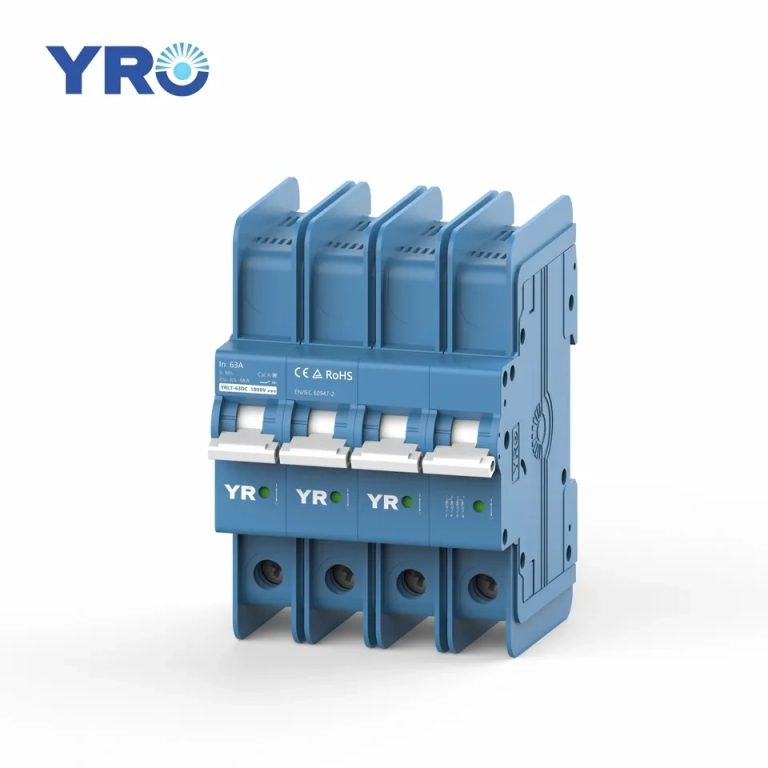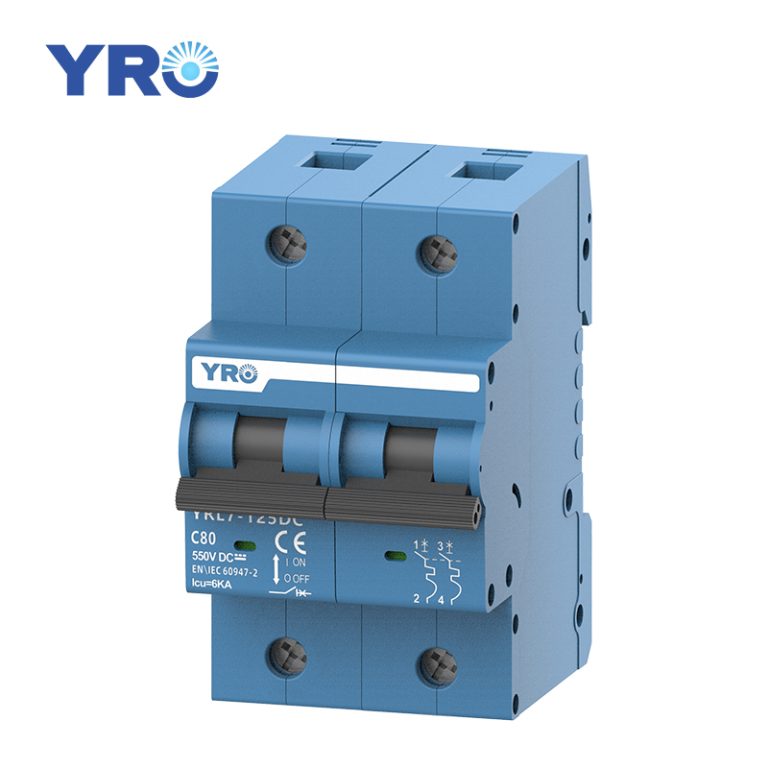






Why do bộ ngắt mạch always trip during rain, while they work fine otherwise? This is mostly because the electrical bộ ngắt mạch are “alerting”. Some electrical problems are not easily detectable in dry conditions, but they will become apparent once the air becomes humid, thus triggering the protection mechanism of the circuit breaker.
How Does Rainwater Cause Electrical Faults?
To understand why rain may cause the electrical ngắt mạch to trip, one can first look at what the circuit breaker is actually monitoring. Standard circuit breakers mainly detect overcurrent, including sustained overload and short circuits. When the current exceeds the rated range, the thermal trip or magnetic trip mechanism inside the circuit breaker automatically cuts off the circuit.
Rainwater itself does not have high conductivity, but in reality, rainwater usually contains minerals, dust, and air pollutants, thus forming unintended conductive paths. Even if a small amount of moisture enters damaged wiring, connection terminals, or the interior of electrical equipment, it may reduce insulation performance and generate leakage current.
If the leakage is severe enough to form a relatively large fault current, the standard circuit breaker may trip due to overcurrent. For devices with ground fault protection function, the operating threshold is usually lower, and some products may even cut off power at only a few milliamperes of leakage current, in order to reduce the risk of electric shock.
Humid Environments Lead to Increased Leakage Current
During rainy days, low voltage bộ ngắt mạch are prone to trip. One of the most common reasons is that moisture enters the electrical system.
Water and electricity are inherently a high-risk combination. When rainwater enters aged cables, outdoor sockets, distribution boxes, or poorly sealed connection points, an electrical leakage path may form.
This situation is particularly evident in high-humidity environments. A small amount of moisture can reduce insulation performance. When insulation capacity decreases, the current may flow along unintended paths. Once the leakage reaches a certain level, circuit breakers with leakage protection functions will automatically cut off the power supply.
It should be noted that if circuit breakers frequently trip during rain, it is not recommended to repeatedly close them. Continuous tripping usually indicates that there are electrical faults in the system that need to be investigated.

Outdoor Wiring Problems Are More Easily Exposed on Rainy Days
A cable that is already slightly damaged may still work normally for a year under usual conditions. But on rainy days, once moisture enters the damaged area, the problem quickly magnifies.
For example, if underground wiring already has insulation damage, rainwater will increase the conductivity of the surrounding environment, thereby triggering abnormal current and ultimately causing the low voltage ngắt mạch to trip.
Water Ingress Inside the Distribution Box
This situation is less common, but much more serious.
Outdoor electrical equipment needs to have certain protective capabilities. If the wiring holes are not properly sealed or the protection level of the distribution box is insufficient, rainwater may gradually enter the interior, increasing the risk of faults.
A good outdoor installation usually includes:
- A protective casing
- Sealing treatment for the cable inlet
- A wiring method to avoid water accumulation
- Regular maintenance and inspection

Can Lightning Damage a Circuit Breaker?
Yes, lightning can damage a mcb electrical breaker.
Lightning can generate very strong transient surge voltage in nearby power systems. Even if lightning does not directly strike a building, nearby lightning strikes can induce high-voltage surges through power grid lines. When this energy travels through the power grid to the distribution box, it poses a threat to the circuit breaker.
We know that the main function of a circuit breaker is overload protection and short-circuit protection; it is not itself a device specifically designed to withstand lightning surges. Therefore, in areas with frequent thunderstorms, surge protective devices are usually used together with circuit breakers.
Frequently Asked Questions (FAQ)
- Can Rainwater Directly Cause a MCB Electrical Breaker to Trip?
Generally not. More often, it is rainwater that makes already existing problems, such as leakage, damaged insulation, or poor connections, more easily triggered.
- After the Circuit Breaker Trips Following Rain, Can It Be Directly Reclosed?
If it happens only occasionally once, one may attempt to restore power after confirming there is no obvious abnormality. But if it trips continuously, it is advisable to inspect the system, rather than repeatedly reclosing.
- Can Merely Humid Air Cause a MCBto Trip?
It is possible. High-humidity environments can lead to condensation forming, reducing insulation performance, thereby triggering protective action.
- Can Lightning Permanently Damage a Circuit Breaker?
It is possible. If the surge voltage is strong enough, the circuit breaker and other electrical components may all be damaged, especially when no surge protective device is installed.
Phần kết luận
On rainy days, electrical ngắt mạchs are more likely to trip. Usually, it’s not because the circuit breaker is “broken”, but the humid environment makes the existing electrical hazards more likely to be exposed.
Often, the tripping of the MCB breaker actually serves as a protective function, preventing the fault from spreading further.
If the circuit breaker trips frequently during rain, a more reasonable approach is to inspect the system rather than repeatedly resetting it. For equipment that operates outdoors for a long time, good protection and regular maintenance are often more important than frequently replacing the circuit breaker.