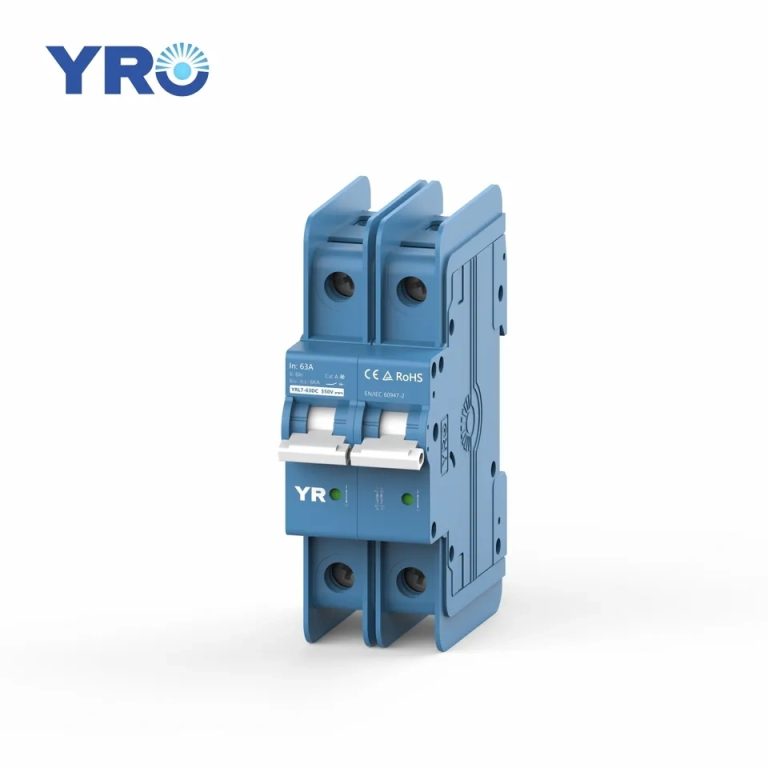








When opening the distribution box, several different brands of circuit breakers are installed inside. For example, an ABB is next to a Siemens, or Eaton’s circuit breakers are installed in a Schneider’s distribution panel. It seems that the sizes match and the installation is fine, and this practice is not uncommon in practice. However, the problem lies in that overcurrent protection units are not just “installable” and can be used without any consideration. Their design, testing methods, and related regulations are not based on this logic.

How to Define Circuit Breaker Compatibility?
Whether circuit breakers of different brands can be mixed is actually not simply about “whether it can be installed,” but about whether it falls within the certification scope of the distribution box. This point is directly related to NEC 110.3(B) and the testing methods of UL and NRTL.
The meaning of NEC 110.3(B) is very simple: all equipment with certification marks must be used in accordance with the requirements in the instructions and on the label, and cannot be used beyond its approved scope of use.
In actual testing, UL or other NRTLs do not test an empty distribution box alone, but test the distribution box together with specified models of circuit breakers as a complete system. In other words, this set of combinations is “verified as a matched set.”
Therefore, on the label of the distribution box, it is usually stated which types or series of circuit breakers can be used, and this information is generally on the inside of the box door or behind the front cover.
If the installed circuit breaker is not on this list, even if the dimensions allow it to fit, it may no longer belong to the originally tested and approved combination.
Successful Installation Does Not Equal True Compatibility
Many circuit breakers have similar appearances and dimensions. This can easily lead to a misunderstanding: as long as they can fit, they can be used normally. However, this judgment is not reliable.
Different manufacturers have different designs for the busbar connection structure, including contact methods, clip shapes, and insertion depths. Even minor differences can affect the transmission of electrical current.
It should be noted that “fitting in” does not mean reliable electrical contact. The circuit breaker may loosen after installation; or it may look tight, but the actual contact may not be uniform. Both of these situations can cause contact heating over the long term.
Tripping Curve Differences Can Affect Protection Effectiveness
A key parameter of a circuit breaker is the tripping characteristic curve, which determines its response speed under overload or short circuit conditions.
Even if two breaker types have the same rated current, their operating characteristics may differ. Some act faster under specific conditions, while others allow higher instantaneous current to pass through.
When different brands are mixed, protection coordination becomes unstable. This is especially important in multi-level protection systems. If coordination is poor, unnecessary tripping may occur, or the protection action may be delayed.

Differences in Temperature Rise and Aging Characteristics
The performance of overcurrent protection units is affected by temperature. Internal materials expand and contract due to heat and cold during use, and their performance will change over time.
Different manufacturers use different materials and structures, so the temperature rise characteristics will also vary. When different brands are mixed in the same distribution box, they may exhibit different working conditions under the same conditions.
This difference may not be immediately apparent, but over time, it may cause some circuit breakers to trip more easily or some parts to have a higher temperature.
Warranty and Liability Issues
Most manufacturers clearly state the compatibility scope of their products, usually recommending that circuit breakers be used with distribution equipment of the same brand. If other brands are used, the warranty terms may be affected.
Once a fault occurs, insurance or warranty claims may be affected, because you are not sure which product caused the accident, and at such times, relevant documentation and usage records become very critical.
How to Safely Find the Correct Replacement?
When it is necessary to replace an electrical protection device, the following steps can be followed to enhance safety and comply as much as possible with the specification requirements:
- Check the label of the distribution panel
The label is usually located inside the box or on the back of the front cover. It will indicate the model of the distribution panel and the types or series of circuit breakers that are allowed to be used.
- Confirm the parameters of the circuit breaker
Based on the original circuit breaker, confirm the required current rating, pole number, and model or series, and match them with the requirements on the distribution panel label.
- Find suitable alternative products
If the original model has been discontinued, you can search for certified alternative breaker types, such as those with UL Classified marking, and clearly stating that they are suitable for the model of the distribution panel. In some cases, there may be compatibility between different brands, but it must be based on official materials rather than relying on experience.
- Don’t just look at whether it fits
Even if the circuit breaker is perfectly matched in size, it does not necessarily meet the certification or testing requirements of the distribution system. Physical fit does not equal electrical compatibility.
- Consult professionals if unsure
If the distribution panel model is unknown or there is no clear compatibility information, it is recommended to consult a licensed electrician or a professional in the relevant field.

Conclusion
Different brands of circuit breakers are not absolutely incompatible in all cases, but there are clear risks. Just matching in size is not enough; electrical contact, action characteristics, and certification status all need to be considered.
A more reliable approach is to use matching products from the same manufacturer, which can provide more predictable performance and is easier to comply with relevant specifications. If it is necessary to mix them, a thorough assessment must be conducted, and a certain degree of uncertainty must be accepted.